Nigeria.
01 / 06

01 / More than a name

Nigeria.

More Than a Name

A nation of many histories. A story still unfolding.

Begin the story

South South — Brass Island, Bayelsa

North West — Argungu, Kebbi

North East — Yankari, Bauchi

North Central — Zuma Rock, Niger State

South East — Igbo communities

South West — Osogbo, Osun

South South — Calabar, Cross River

02 / Before the Borders

Before the
borders.

Long before anyone drew the outline of “Nigeria”, the lands between the Sahel and the Atlantic held kingdoms, city-states and confederations, each with its own law, faith and art. These four traditions are not a single story. They are four separate ones that happen to share a map today.

c. 500 BCE — 1897 CE

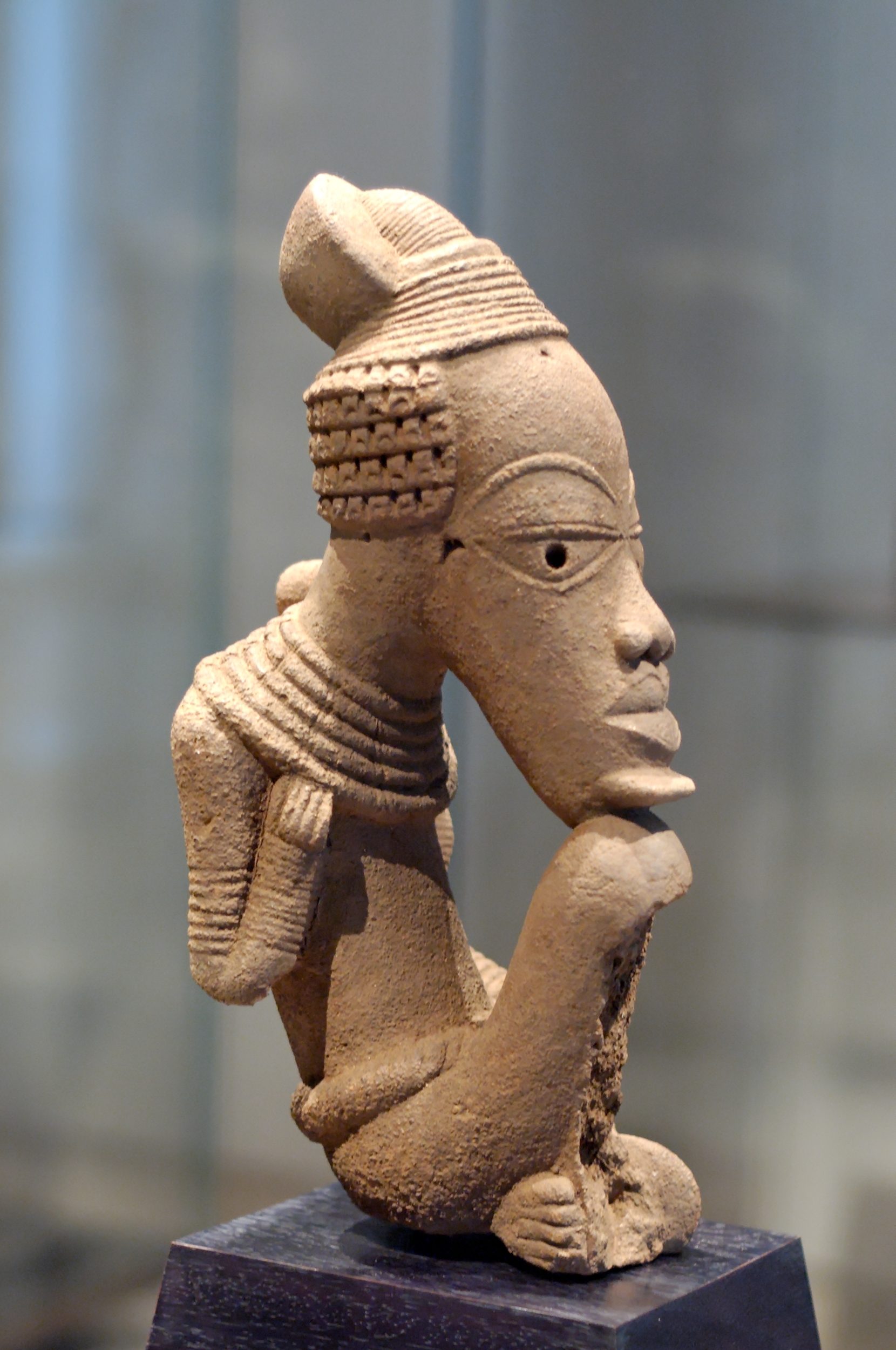
A Nok terracotta figure seated with its head resting on one hand
Nok terracotta · Louvre · photo M.-L. Nguyen, public domain
A Nok terracotta figure seated with its head resting on one hand
Nok terracotta figure, Musée du Louvre

i. c. 500 BCE – 200 CE

Nok

Jos Plateau and the Kaduna region · North Central

Among the earliest known large-scale terracotta sculpture in sub-Saharan Africa. Nok artists modelled heads with elaborate hairstyles and drilled pupils, and the same communities were smelting iron.

A bronze roped pot of the Igbo-Ukwu tradition in a museum case
Igbo-Ukwu bronze roped pot, museum display

ii. c. 9th century CE

Igbo-Ukwu

Anambra State · South East

Skilled bronze casters in the Igbo heartland made roped vessels, shell-shaped bowls and regalia by the lost-wax method, centuries before any European contact with the region.

A bronze head in the Ife naturalistic style on display in a museum
Ife-style bronze head on display in Ilorin

iii. c. 12th – 15th centuries

Ife

Ilé-Ifè, Osun State · South West

The sacred city of the Yoruba produced strikingly naturalistic heads in copper alloy and terracotta. Fine parallel lines across the face are a signature of the Ife style, and the naturalism astonished the first European scholars who saw it.

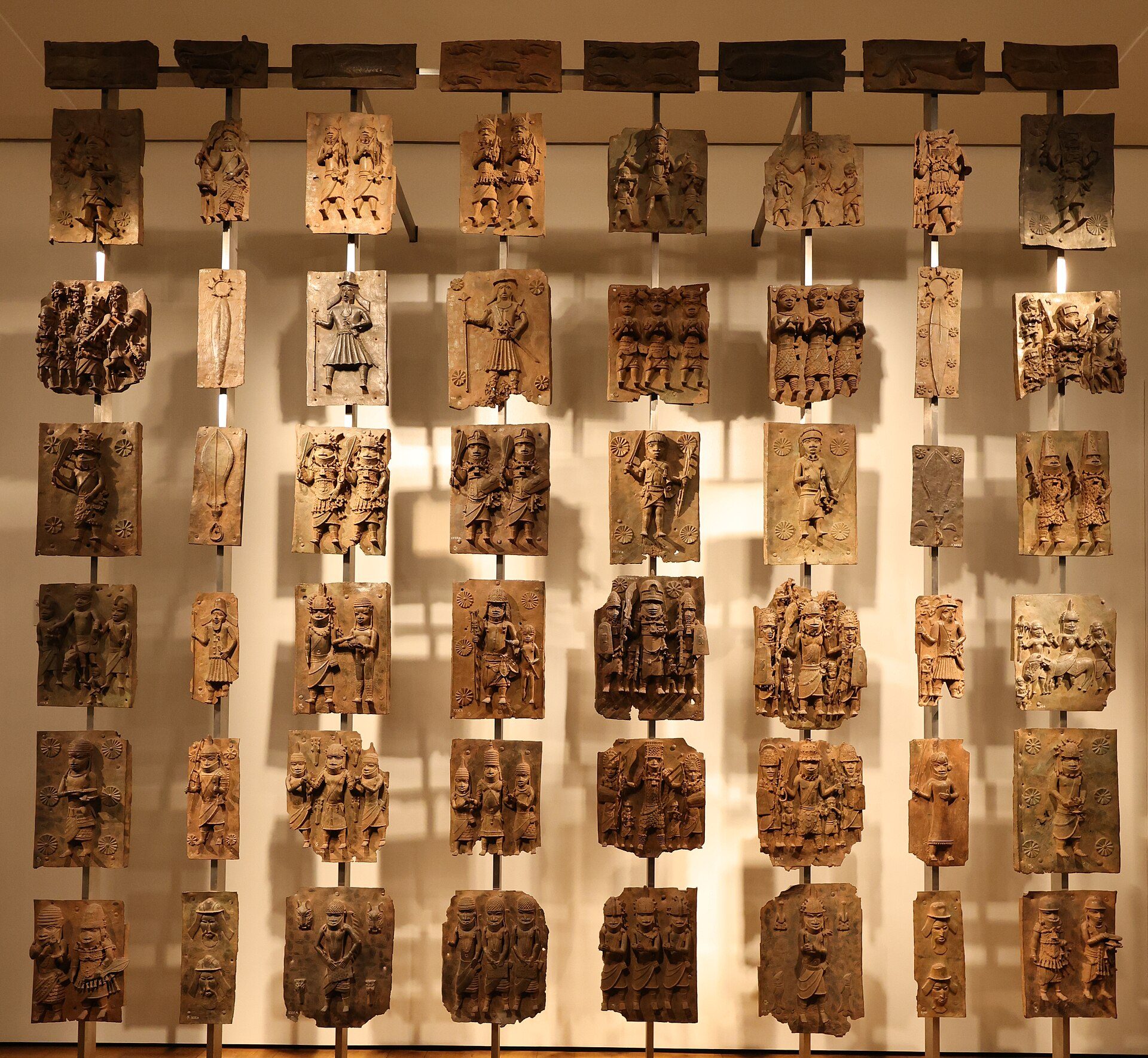
A Benin bronze plaque of the royal palace tradition mounted on a museum wall
Benin plaque of the royal palace tradition

iv. 16th – 17th centuries

Benin

Benin City · South South

Brass guilds of the Oba cast hundreds of plaques that lined the royal palace, recording court ceremony, warriors and Portuguese visitors. Much of this archive was taken in 1897 — a story we return to in Chapter 3.

The exhibit hall · real 3D

Turn it in your hands.

Two exhibits, both in real 3D: a reconstructed Ife-style head, and a map of Nigeria built for this story.

A bronze head in the Ife naturalistic style on display in a museum

Loading the 3D model…

Reconstruction · Ife style

Bronze head from Ife

Drag to orbit, pinch or scroll inside the viewer to move closer. This is a 3D artist’s reconstruction of an Ife-style bronze head, modelled from photographs. It is not a museum scan and should not be read as a record of one particular object.

Model by yugengen · CC BY 4.0 · view on Sketchfab

One of several independent traditions on this page. Ife is one city of one people; the same land also holds Nok, Igbo-Ukwu, Benin and many more.

Drag to rotate · select a zone

Original 3D map, extruded from Natural Earth boundaries (public domain).

Six zones, one reading of the map

North Central

The meeting ground of the Niger and Benue, home to some of the oldest sculpture in Africa.

In this story

Nok terracottas · Tiv Kwagh-hir · Zuma Rock

7 states · Benue, FCT Abuja, Kogi, Kwara, Nasarawa, Niger, Plateau

The six zones are an administrative convention. Peoples, languages and faiths cross every one of these lines, and no zone speaks for the whole.

03 / The making of a nation

The making
of a nation.

Nigeria in its present shape is barely over a century old. These are six turning points, in order, told with the photographs and papers that survive them.

Benin City, February

The palace falls.

A British expedition captured Benin City and burned the royal quarter. Thousands of brass plaques, heads and ivories were carried off and sold. Many now stand in museums in Europe and North America, and Nigeria continues to ask for their return.

Read more: Benin Expedition of 1897

Rows of Benin bronze plaques displayed in the British Museum

Benin plaques displayed in London

Lagos, 1 January

One name for many nations.

The Northern and Southern Protectorates were joined under Frederick Lugard. The word “Nigeria”, after the River Niger, had been proposed in 1897 by the journalist Flora Shaw: a name given from outside, to a land of hundreds of nations.

Read more: Amalgamation of Nigeria

Today’s outline, as it was drawn

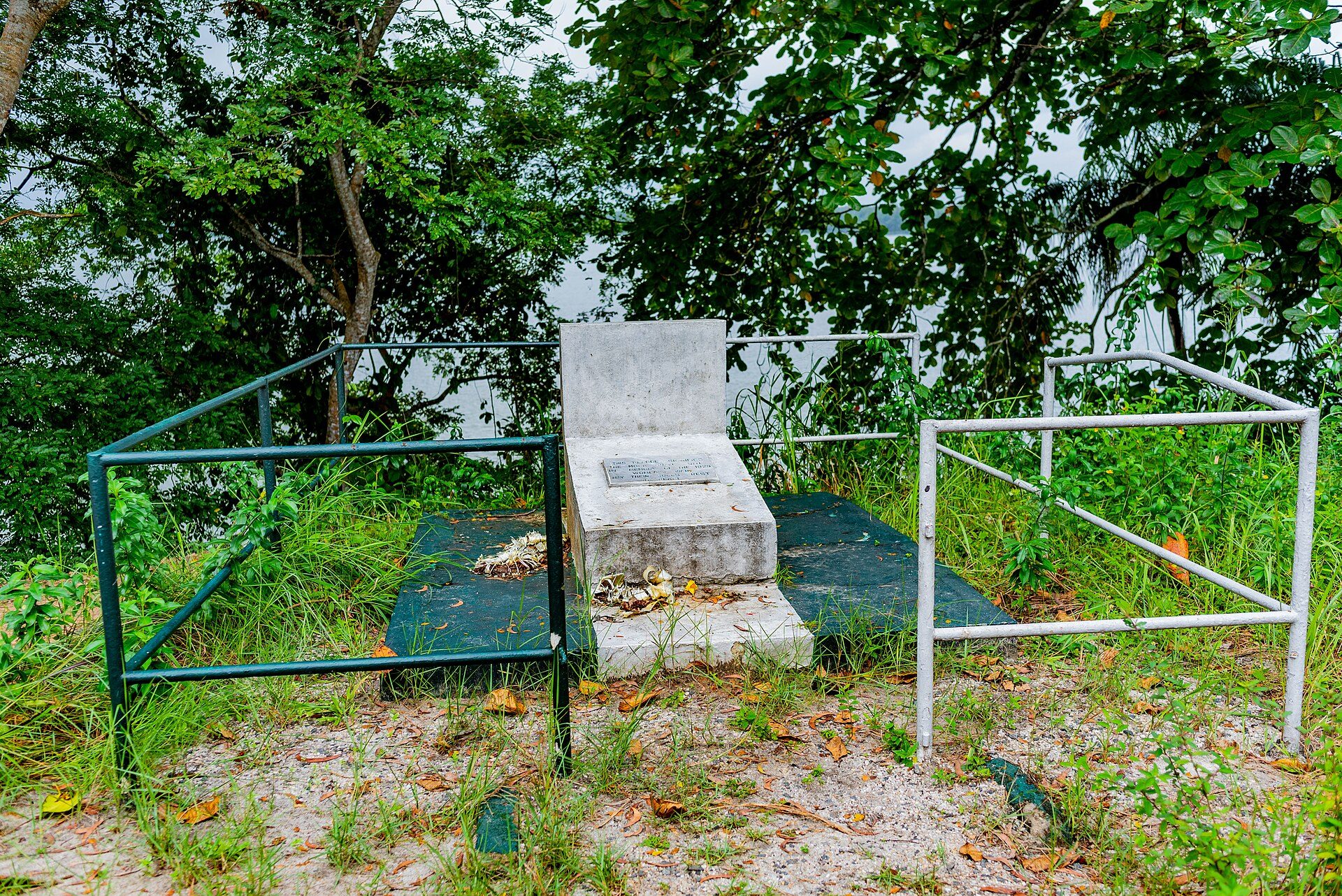
Aba, November–December

The women say no.

Tens of thousands of Igbo and Ibibio women marched across south-eastern Nigeria against rumours of new taxes and the rule of colonial “warrant chiefs”. Dozens were killed. The Women’s War is remembered as one of the great anti-colonial protests in West Africa.

Read more: Aba Women’s Riots

Memorial grave marking the 1929 Women's War in Aba

Memorial to the 1929 Women’s War, Aba

Lagos, 1 October

A flag goes up.

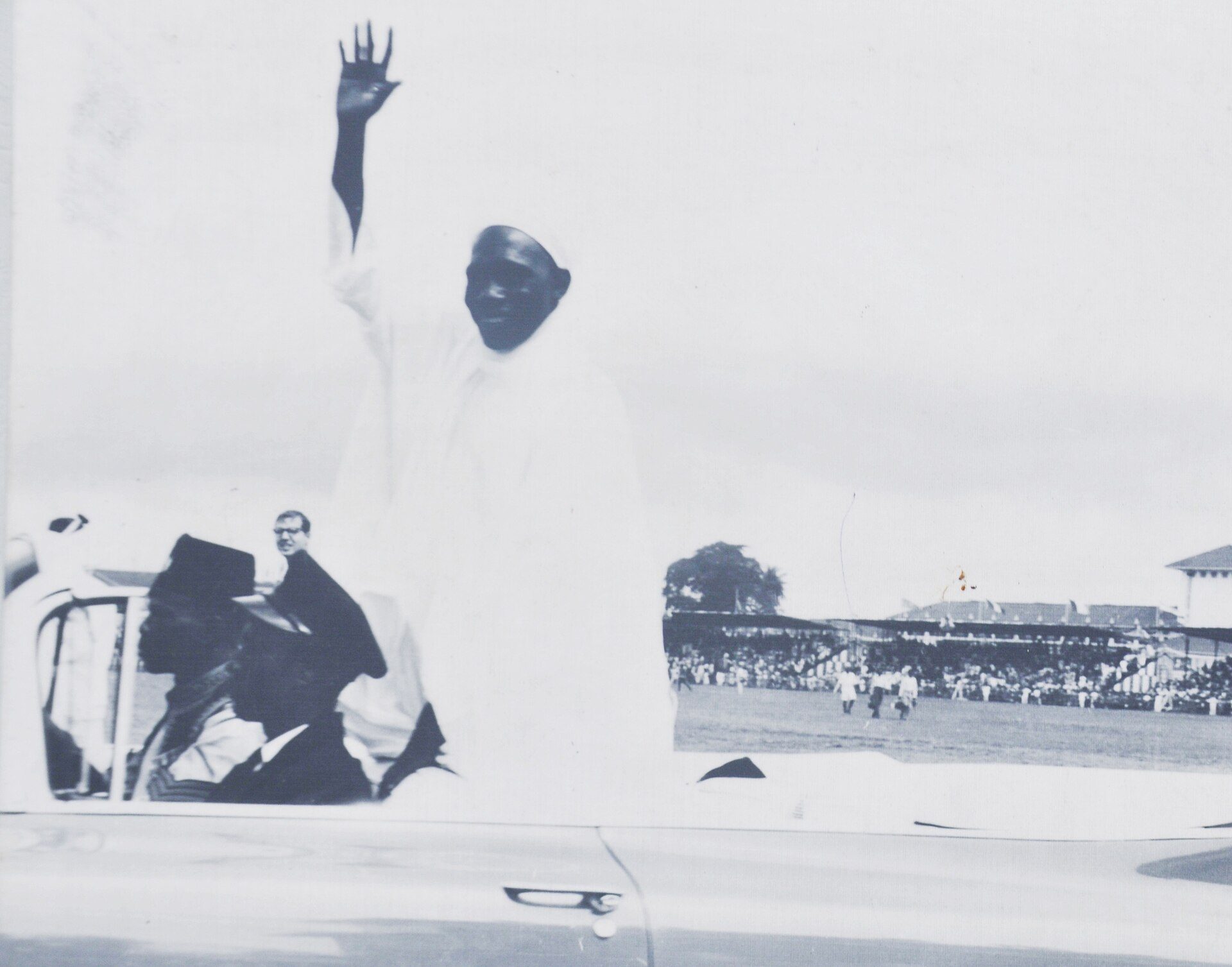
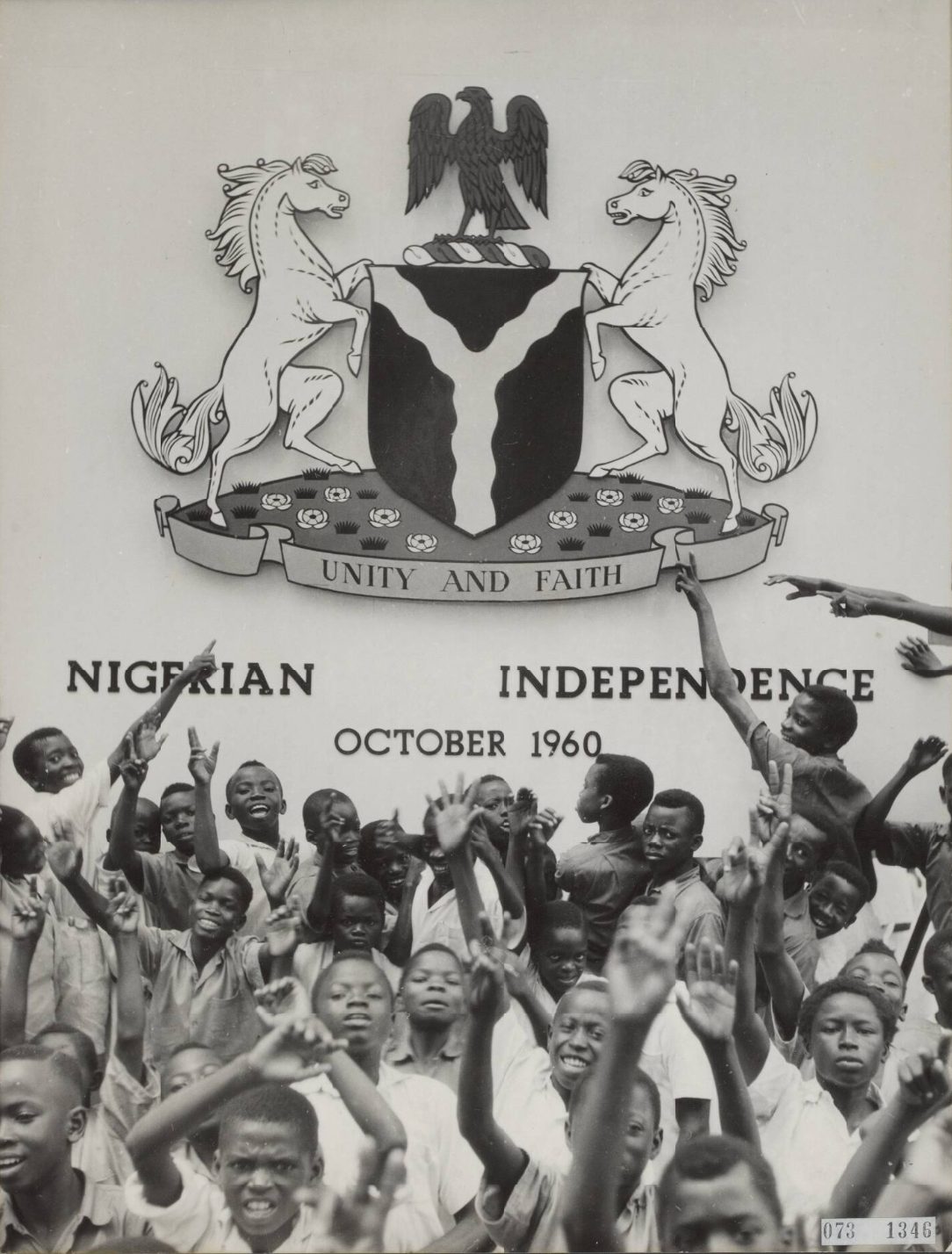
Nigeria became independent, with Abubakar Tafawa Balewa as its first Prime Minister. Three years later it declared itself a republic. The crowds in 1960 were looking forward, not back.

Read more: Independence Day (Nigeria)

Prime Minister Abubakar Tafawa Balewa waving from a car on Independence Day
Crowd celebrating beneath the Nigerian independence emblem, October 1960

Independence Day, 1960

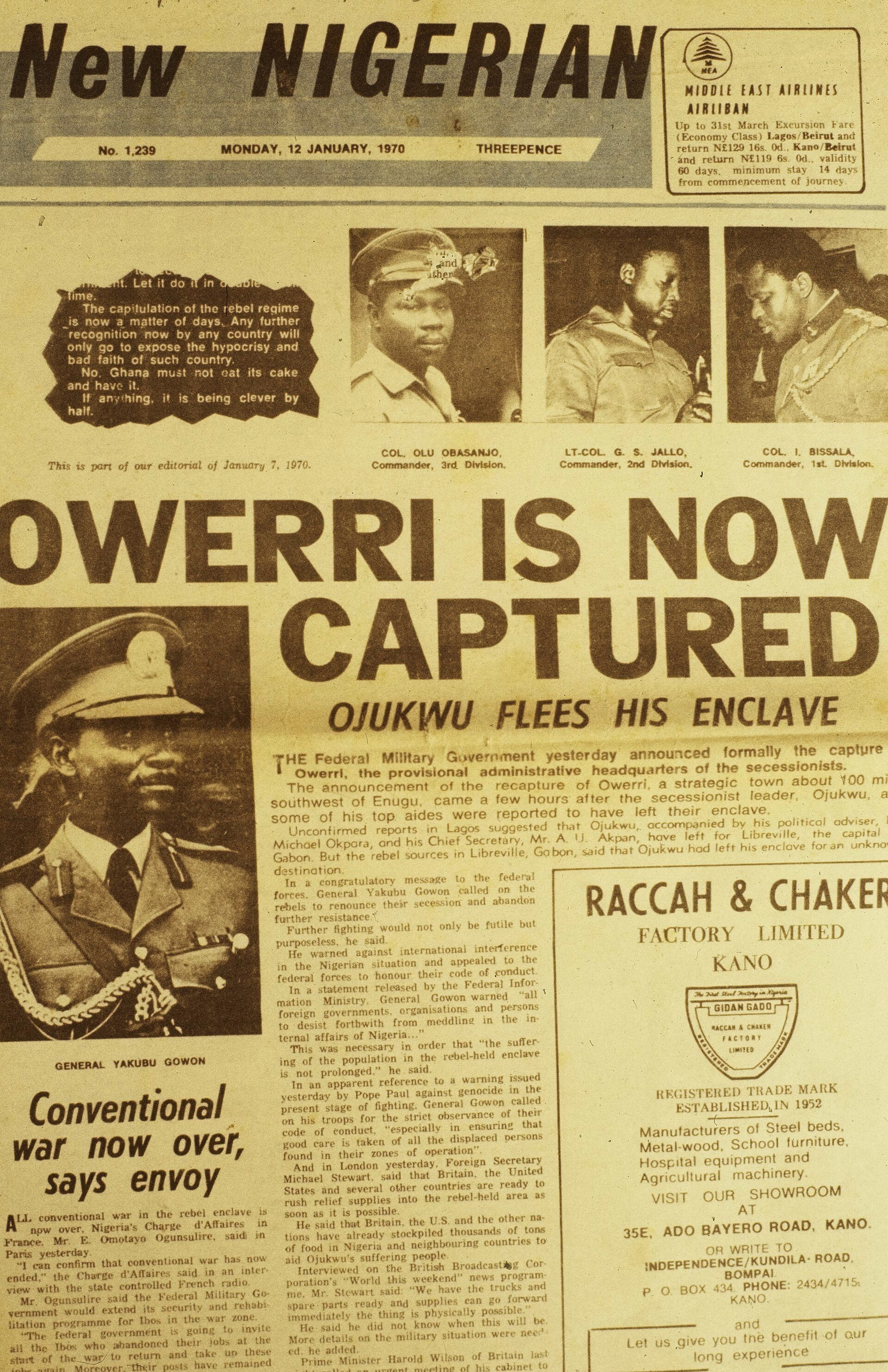
January

The war ends.

After the Eastern Region seceded as Biafra, the civil war was fought from 1967 until January 1970. Estimates of the dead run from several hundred thousand to over a million, most lost to hunger. Head of State Yakubu Gowon declared “no victor, no vanquished”.

Read more: Nigerian Civil War

Front page of the New Nigerian newspaper announcing Owerri captured at the end of the civil war

New Nigerian front page, January 1970

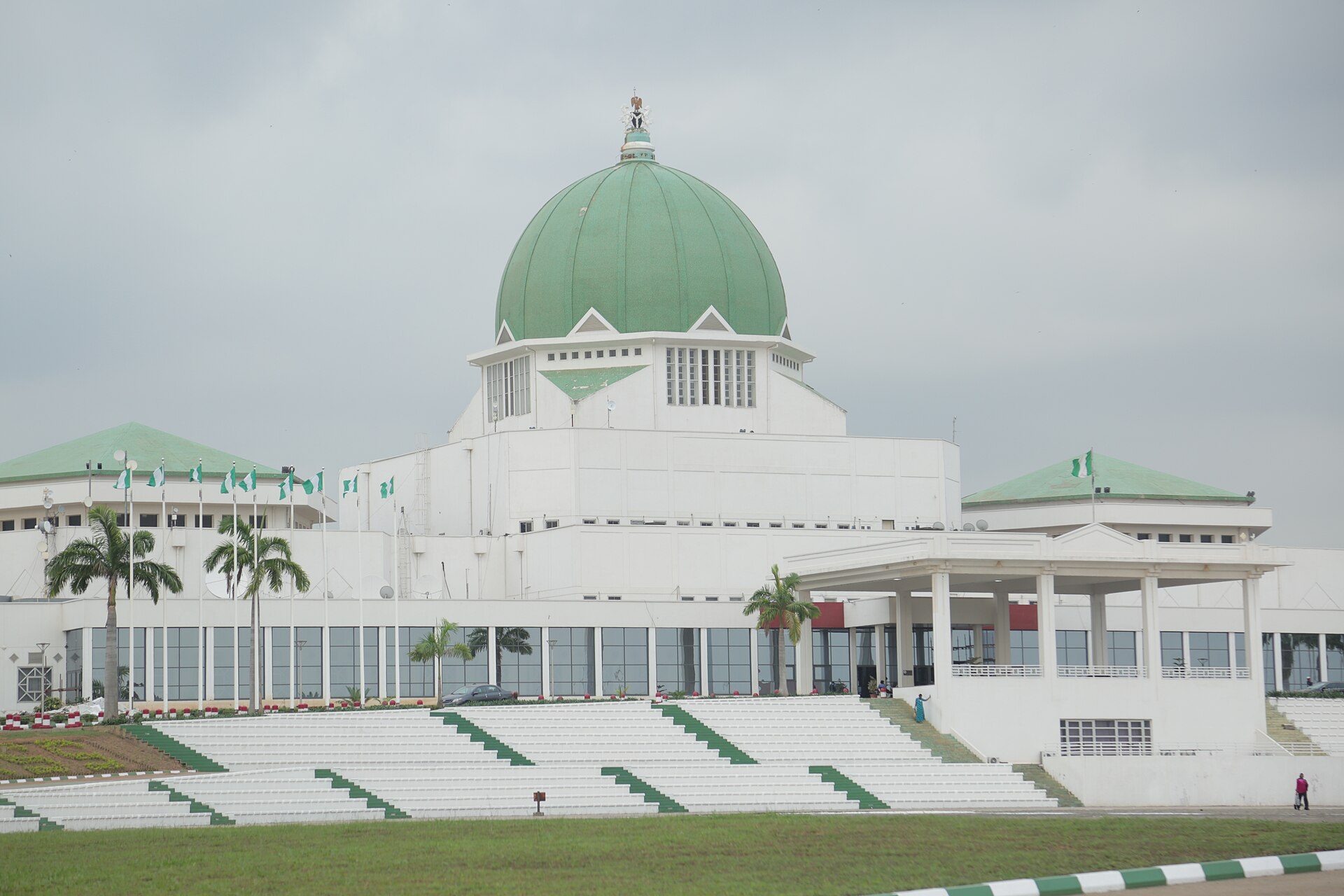
Abuja, 29 May

The vote returns.

Olusegun Obasanjo took office after elections, ending a long period of military government. In 2015, for the first time, power passed from one party to another at the ballot box.

Read more: 1999 Nigerian presidential election

The National Assembly building in Abuja, home of Nigeria's legislature

The National Assembly, Abuja

04 / The culture within

The culture
within.

More than 250 ethnic groups and over 500 languages share this country. We move through the six geopolitical zones, but the zones are a way of reading the map, not a fence: communities, languages and faiths cross every line.

Keep scrolling → north to south

A dense crowd of fishers in the water at the Argungu Fishing Festival, seen from above
Argungu, Kebbi State

01 / 06 — North West

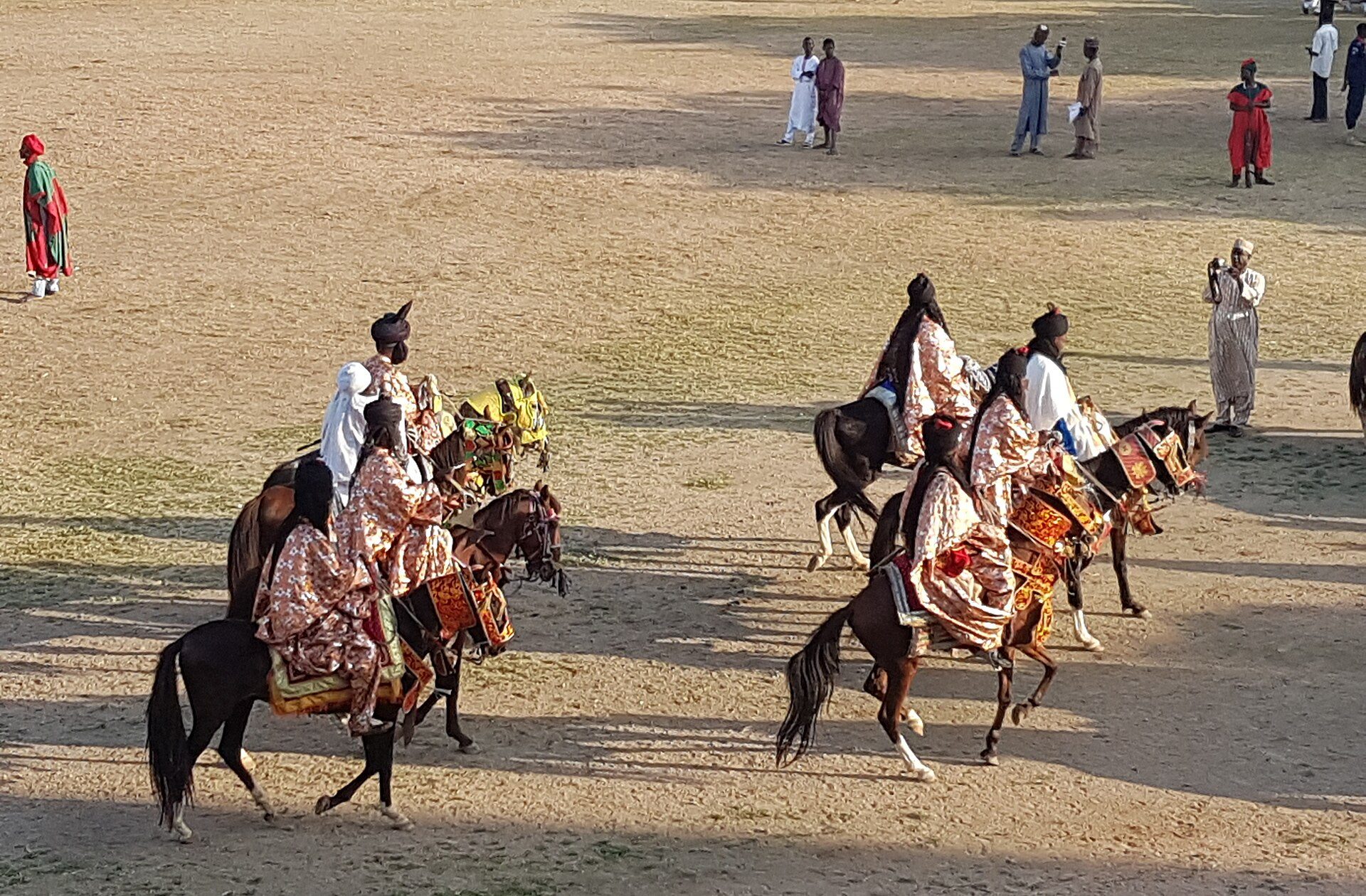
The river and the horse

At Argungu, in Kebbi State, thousands wade into the river with hand nets and gourd floats in a fishing contest. In Kano, riders in full regalia turn out for the Durbar, a procession that marks the great Muslim festivals.

  • Argungu, Kebbi
  • Kano
Dry-stone walls and standing stones of the Sukur cultural landscape in Adamawa State
Sukur, Adamawa State

02 / 06 — North East

Stone and spring

On a hill in Adamawa, the Sukur kingdom built terraces and paved paths of dry stone around the palace of its Hidi, a landscape inscribed as Nigeria’s first UNESCO World Heritage Site. Further west, in Bauchi State, a warm spring runs clear through Yankari.

  • Sukur, Adamawa
  • Yankari, Bauchi
Painted Kwagh-hir masks and puppets of the Tiv people arranged on a table
Benue State

03 / 06 — North Central

Masks and monoliths

In Benue State, the Tiv theatre of Kwagh-hir mixes carved masks, painted panels, puppets, drums and storytelling. Further west, Zuma Rock rises more than 700 metres from the plain, a gateway on the road into Abuja.

  • Benue
  • Zuma Rock, Niger State
The entrance of Olumo Rock with its granite outcrops and visitor pavilions
Abeokuta, Ogun State

04 / 06 — South West

Rock and hill

Olumo Rock shelters caves and shrines above Abeokuta, once a refuge for the Egba people. In Ondo State, the granite dome of Idanre Hills is climbed by hundreds of steps to a hilltop settlement.

  • Abeokuta, Ogun
  • Idanre, Ondo
Hands slicing a freshly harvested yam on a metal platter at a New Yam celebration
Igbo community, south-east Nigeria

05 / 06 — South East

First harvest

Among Igbo communities, the New Yam festival (Iri Ji) marks the end of the rains and the first harvest. The yam is offered to the ancestors and the earth before anyone eats, and then it is shared.

  • Igbo communities
Carnival performers with painted shields and feathered headdresses at the Calabar Carnival
Calabar, Cross River State

06 / 06 — South South

Water and carnival

The Niger Delta is a maze of creeks where fishing, boat building and palm-oil work shape the day. In Calabar, the December Carnival turns the streets into a procession of bands, shields and feathers.

  • Niger Delta, Bayelsa
  • Calabar, Cross River
Scroll

05 / Beyond our borders

Beyond our
borders.

A run of milestones, one at a time. Teams and individuals, women and men, field, page, stage and screen, each checked against its official source. Prizes are named as prizes; icons are named as icons.

Where no cleared photograph exists, we use type.

7 November 2026 · Rabat, Morocco · FIFA U-17 Women’s World Cup final

Worldchampions.

Nigeria 2 — 1 Japan

Awawu Bashiru 39′ · Oluebube Umejiaku 47′

The Flamingos became the first African women’s team to win a FIFA world title at any level.

05 / Beyond our borders — On the field

01 / 06

Learn the story

Facts here come from FIFA and CAF reporting. FIFA’s photographs are not reused on this site, so this scene is an original typographic and line-art composition.

Sources

2026 · Individual award

GoldenBall.

Oluebube Umejiaku

The tournament’s best player, and Player of the Match in the final. She scored the second goal.

05 / Beyond our borders — On the field

02 / 06

Learn the story

Oluebube Umejiaku won the adidas Golden Ball for the tournament’s best player. This is an individual award, separate from the team’s title. She was also Player of the Match in the final. No cleared photograph is available, so the frame is typographic.

Sources

Golden Eaglets · men’s Under-17s

Five worldtitles.

Nigeria has lifted the FIFA U-17 World Cup five times, across three decades of young squads.

  1. 011985
  2. 021993
  3. 032007
  4. 042013
  5. 052015

05 / Beyond our borders — On the field

03 / 06

Atlanta, 1996 · Football

Olympicgold.

Nigeria’s men’s team became the first African side to win the Olympic football title.

Atlanta, 1996 · Long jump

7.12 m

Chioma Ajunwa

Her gold in the women’s long jump was Nigeria’s first individual Olympic title.

05 / Beyond our borders — On the field

04 / 06

Learn the story

Two separate achievements in the same Games: the men’s football team, and Chioma Ajunwa in the long jump. They are told side by side, not as one team.

Sources

Eugene, Oregon · 2022 · 100 m hurdles

12.12

seconds · world record

Tobi Amusan broke the women’s world record in the semi-final at the World Championships, then won the world title.

Women hurdlers in mid-race at the 2022 World Athletics Championships in Oregon, Tobi Amusan in the green Nigerian kit

05 / Beyond our borders — On the field

05 / 06

Learn the story

Sources

Photo: Erik van Leeuwen, attribution: Erik van Leeuwen (bron: Wikipedia). · CC BY-SA 4.0

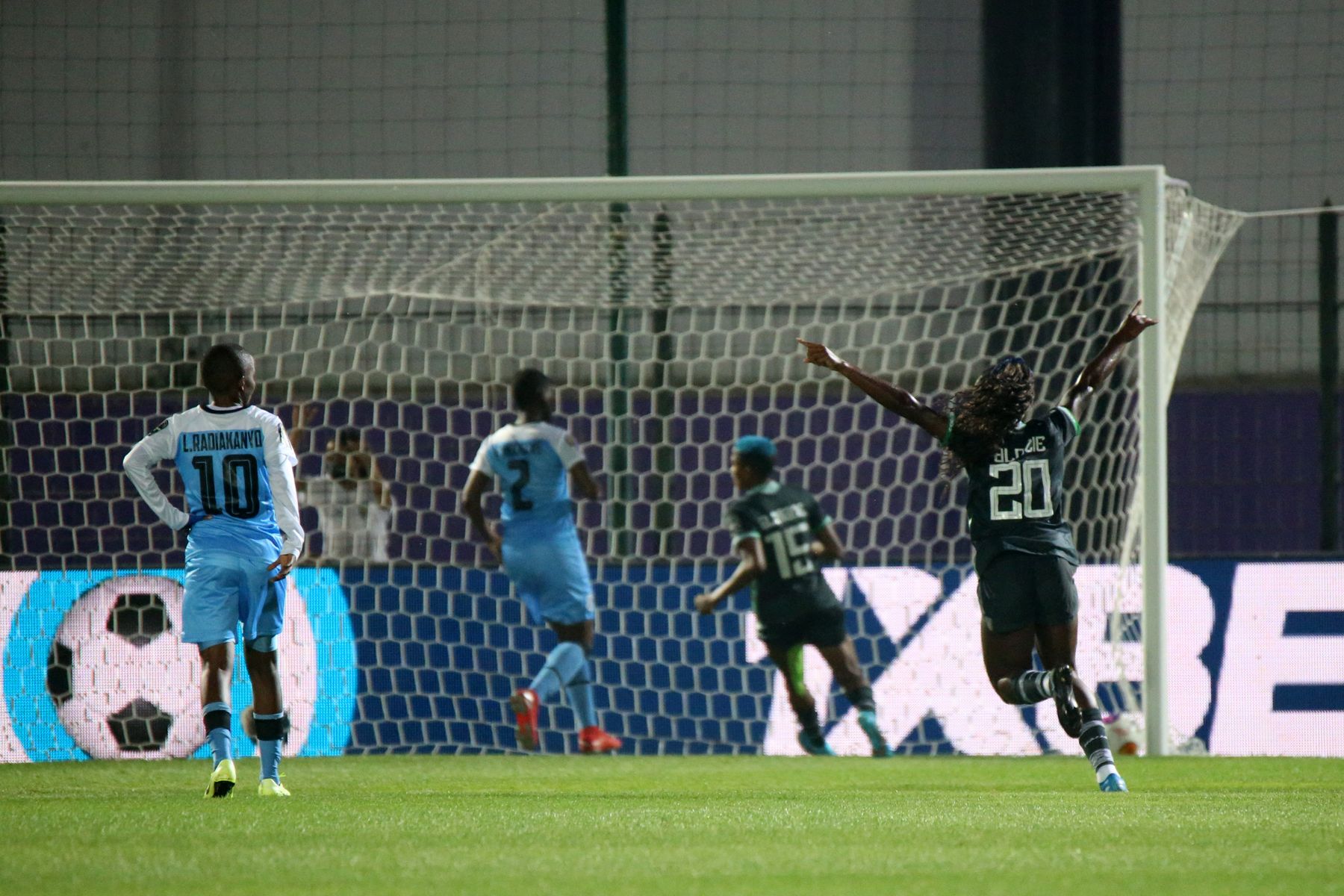
A Nigerian player raises both arms in celebration beside the goal during a Women’s Africa Cup of Nations match

Super Falcons · 2025 · photo: WAFCON 2022

10

Women’s Africa Cup of Nations titles

A comeback win over Morocco, 3–2, in 2025 gave the Super Falcons a tenth continental crown.

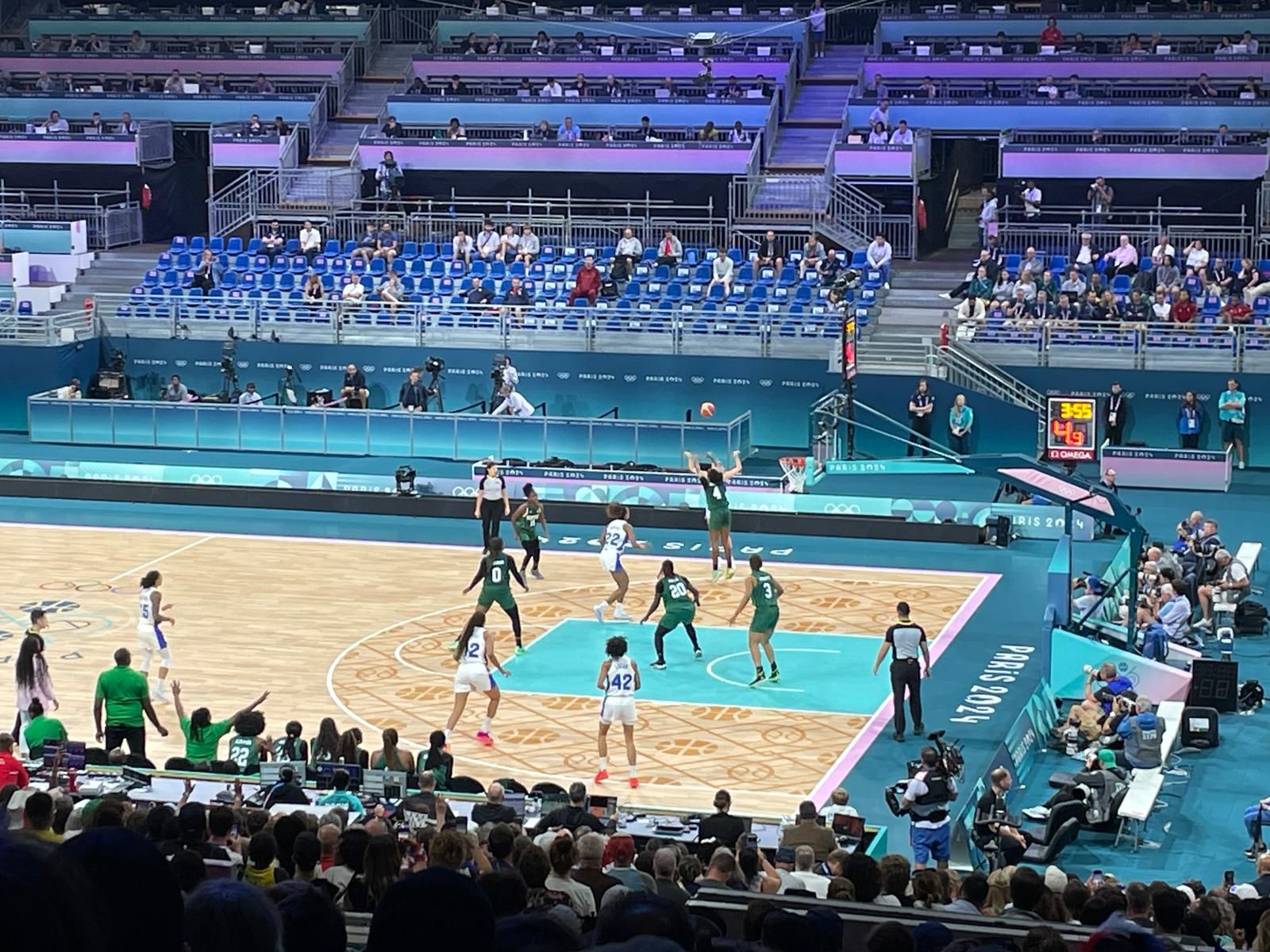
Nigeria’s D’Tigress in green defending against France in the Olympic women’s basketball tournament

D’Tigress · 2025 · photo: Paris 2024

5

Straight AfroBasket titles

The basketball team beat Mali 78–64 to win a fifth consecutive FIBA Women’s AfroBasket.

05 / Beyond our borders — On the field

06 / 06

Learn the story

Photographs are from other matches by the same teams, not the 2025 finals: Super Falcons v Botswana, WAFCON 2022, Morocco; France v Nigeria, Paris 2024.

Sources

Photo: Happiraphael · CC BY-SA 4.0 · Supporterhéninois · CC BY-SA 4.0

Wole Soyinka speaking in front of bookshelves in Stockholm

Literature · 1986

Nobel Prize in Literature

Wole Soyinka

Playwright, poet and essayist, Wole Soyinka became the first African to receive the Nobel Prize in Literature.

05 / Beyond our borders — Words

01 / 06

Learn the story

Sources

Photo: Frankie Fouganthin · CC BY-SA 4.0

Ben Okri reading at a lectern

Literature · 1991

Booker Prize

Ben Okri

The Famished Road follows Azaro, a spirit-child born into a city of hardship and wonder. It won the Booker Prize in 1991.

05 / Beyond our borders — Words

02 / 06

Learn the story

Sources

Photo: Serine Ben Brahim · CC BY-SA 4.0

Chimamanda Ngozi Adichie standing at a lectern in a patterned orange outfit

Literature · 2007

Orange Prize for Fiction

Chimamanda Ngozi Adichie

Half of a Yellow Sun, a novel of the Biafran war, won the prize now known as the Women’s Prize for Fiction.

05 / Beyond our borders — Words

03 / 06

Learn the story

Sources

Photo: Carlos Figueroa · CC BY-SA 4.0

Burna Boy performing on stage

Music · Grammy 2021

Best Global Music Album

Burna Boy

Twice as Tall won the Grammy for Best Global Music Album, a landmark for Afrobeats on the world stage.

05 / Beyond our borders — Sound

04 / 06

Learn the story

Sources

Photo: Nuță Lucian from Cluj-Napoca, Romania · CC BY-SA 2.0

Wizkid on stage holding a microphone under blue lights

Music · Grammy 2021

Best Music Video

Wizkid

Wizkid is credited, with Beyoncé and Blue Ivy Carter, on “Brown Skin Girl”, which won the Grammy for Best Music Video.

05 / Beyond our borders — Sound

05 / 06

Learn the story

Sources

Photo: Muhammed amine benloulou · CC BY-SA 4.0

Tems performing on stage among purple pampas grass props

Music · Grammy 2025

Best African Music Performance

Tems

“Love Me JeJe” won the Grammy for Best African Music Performance in 2025, only that category’s second year.

05 / Beyond our borders — Sound

06 / 06

Learn the story

Sources

Photo: Patrick Cristiano · CC BY-SA 4.0

Cinema · Sundance 2023

Mami Wata

Special Jury Award for Cinematography

C.J. Obasi’s black-and-white film won this World Cinema Dramatic prize for its cinematographer, Lílis Soares.

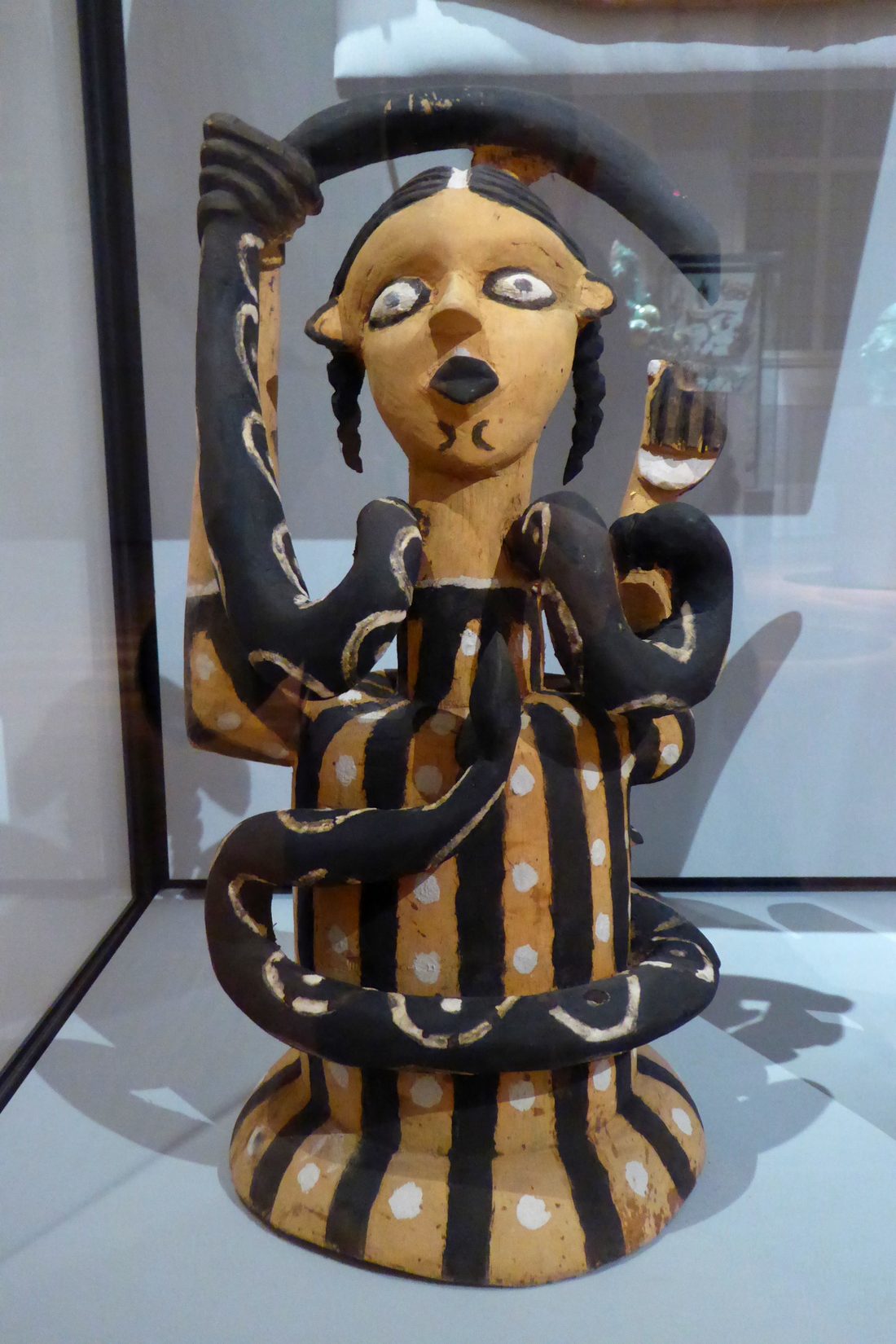
A painted wooden Mami Wata figurine from twentieth-century Nigeria on display in a museum case

Mami Wata figurine, not a film still

05 / Beyond our borders — Screen & world

01 / 03

Learn the story

The prize went to cinematographer Lílis Soares, not to the film as a whole. No film still is reused. The photograph is a twentieth-century Mami Wata figurine from Nigeria (Horniman Museum), showing the water-spirit tradition the film’s title draws on; it is not a scene from the film.

Sources

Photo: Ethan Doyle White · CC BY-SA 4.0

Global leadership · 1 March 2021

First woman.First African.

Ngozi Okonjo-Iweala

A former Finance Minister of Nigeria, she became Director-General of the World Trade Organization.

Ngozi Okonjo-Iweala in a green and gold headwrap and beaded necklace

05 / Beyond our borders — Screen & world

02 / 03

Learn the story

Sources

Photo: World Trade Organization · CC BY-SA 2.0

Science education · 1992

KalingaPrize.

Peter Akinsola Okebukola

UNESCO honoured the Nigerian professor of science education with its Kalinga Prize for the Popularization of Science.

05 / Beyond our borders — Screen & world

03 / 03

Learn the story

The UNESCO Kalinga Prize for the Popularization of Science honours people who explain science to the public. No cleared portrait is available, so the frame pairs the prize with an original medallion graphic.

Sources

05 / Beyond our borders — Also

Four more
names.

Two award winners and two icons of influence. We keep those two apart on purpose: reach and recognition are different things.

Victor Osimhen smiling in the green Nigeria national team kit

Football · 2023 · Award winner

Victor Osimhen

Named the CAF African Men’s Player of the Year for 2023.

CAF Awards 2023 ↗Photo: Fédération Guinéenne de Football (Flickr) · Public domain (Flickr PDM)
Asisat Oshoala playing for Barcelona in the Champions League

Football · 2023 · Award winner

Asisat Oshoala

A record sixth CAF Women’s Player of the Year title.

CAF Awards 2023 ↗Photo: Steffen Prößdorf · CC BY-SA 4.0
Fela Kuti on stage with both fists raised

Music · 1938–1997 · Cultural icon

Fela Kuti

The pioneer of Afrobeat, a bandleader and activist whose sound still travels. A cultural icon, shown here for his influence rather than an award.

Fela Kuti, overview ↗Photo: Distributed by Celluloid Records · Public domain
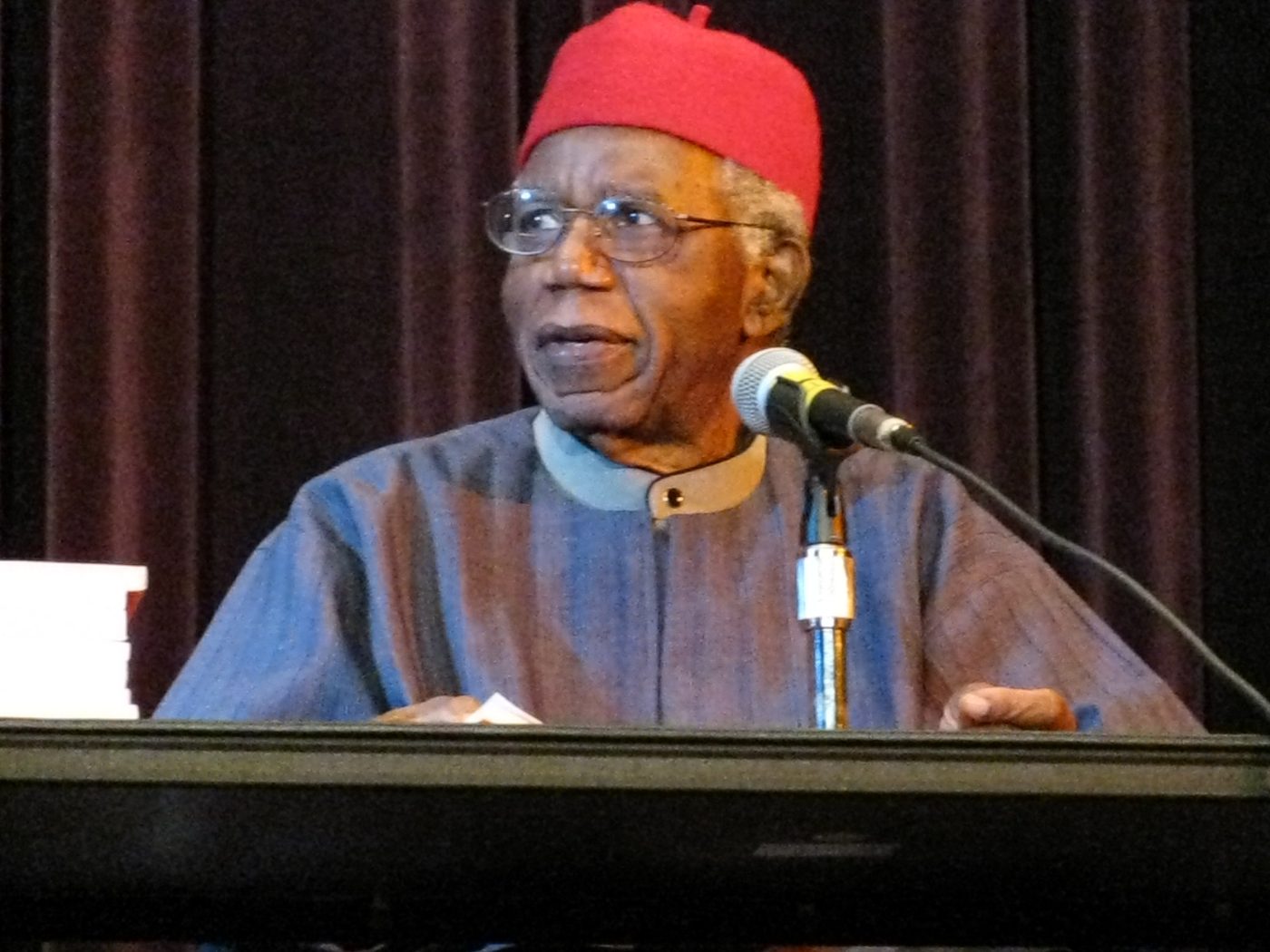
Chinua Achebe speaking at a lecture

Literature · 1930–2013 · Cultural icon

Chinua Achebe

Things Fall Apart (1958) is among the most widely read novels from Africa. A cultural icon, shown for his influence rather than an award.

Chinua Achebe, overview ↗Photo: Stuart C. Shapiro · CC BY 3.0
Scroll

Every name here began as a child with a ball, a book or a microphone. Who is next?

06 / The story continues

The story
continues.

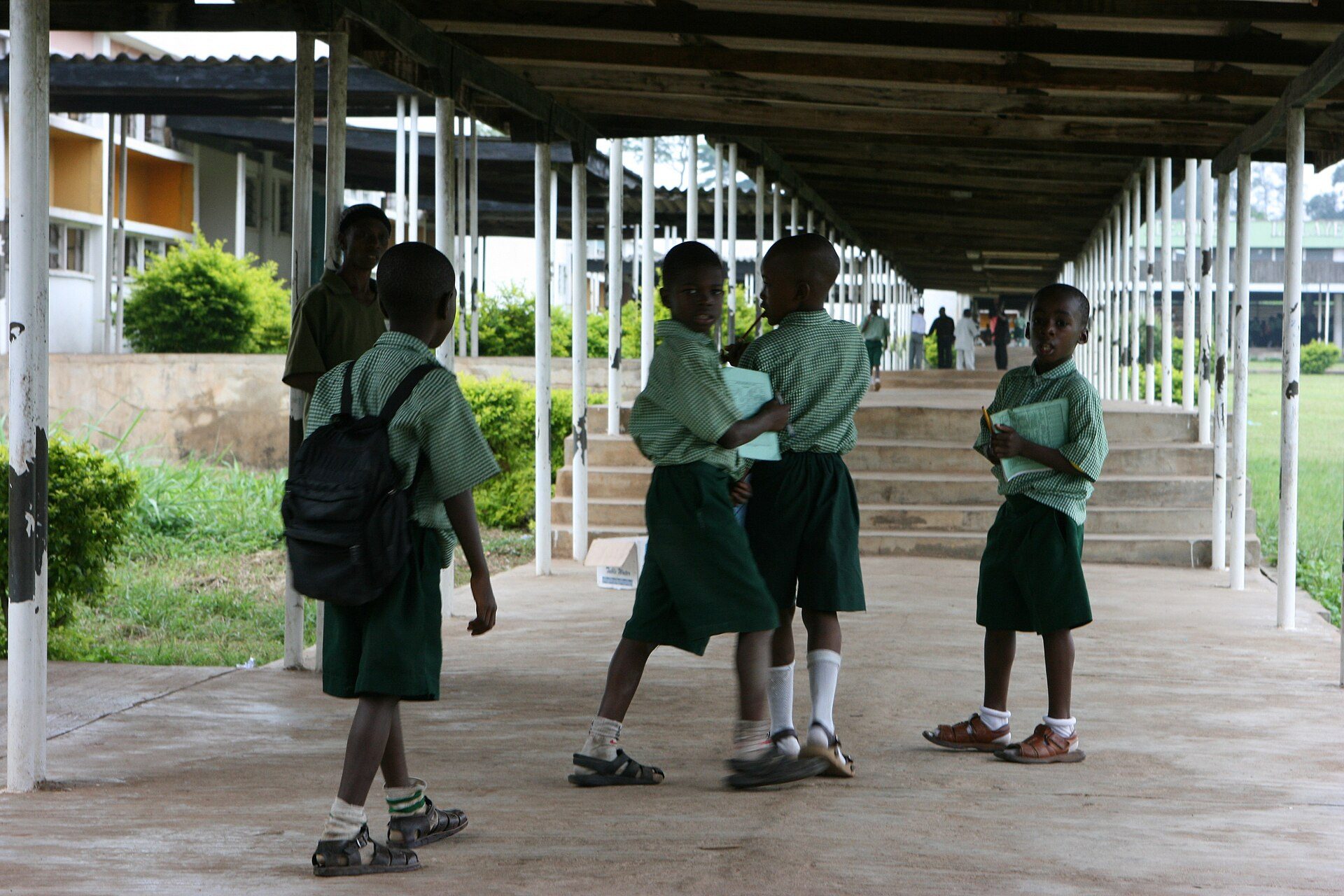
The past is not behind Nigeria; it is the ground under it. Today it is among the youngest countries on earth, and every name in the last chapter began as a schoolchild somewhere, on a walkway much like the one below.

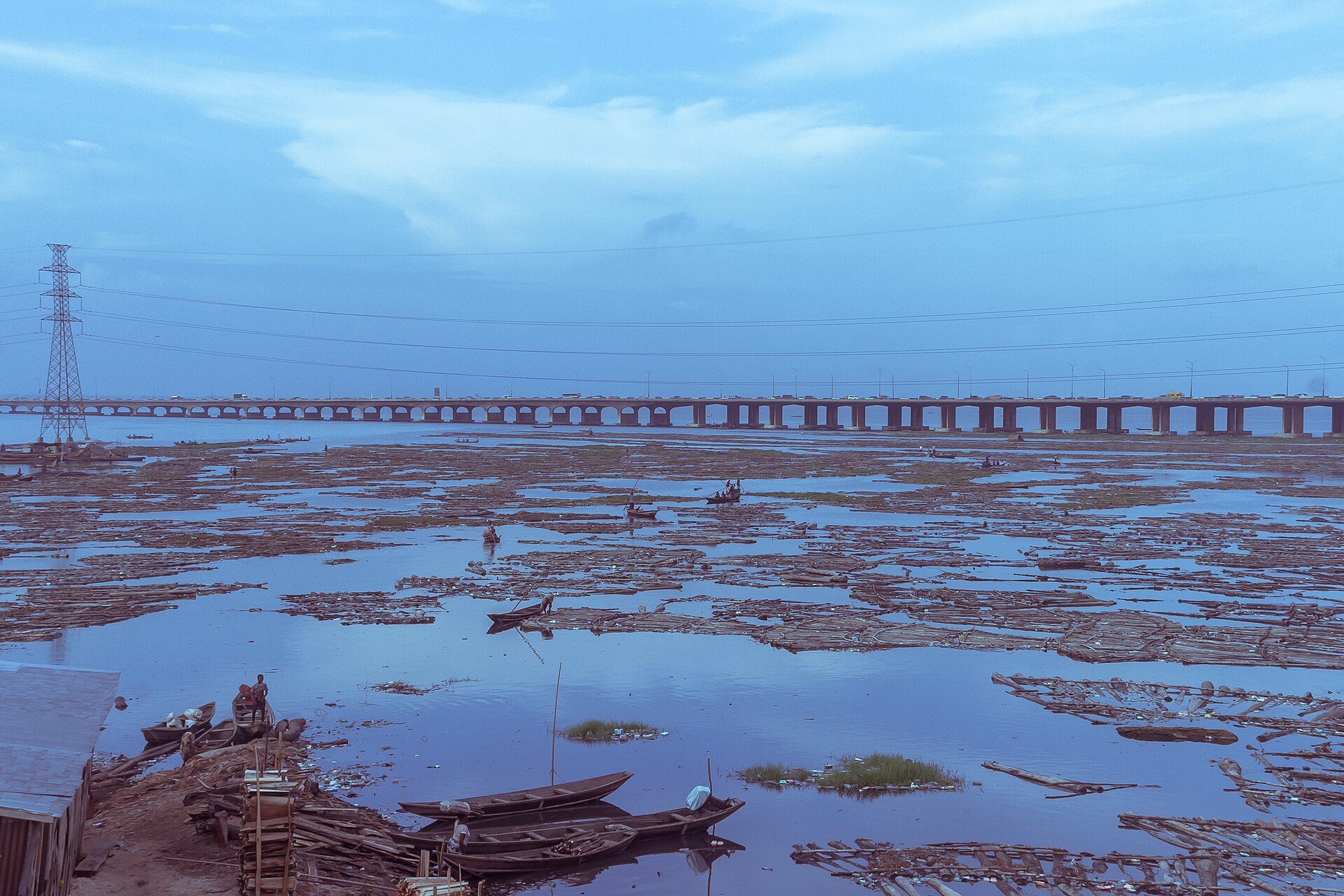
The Third Mainland Bridge stretching across the Lagos Lagoon at dusk
Lagos Lagoon · Johnbrainyvisuals · CC BY-SA 4.0
ethnic groups
250+Hausa, Yoruba, Igbo, Fulani, Ijaw, Kanuri, Tiv, Edo, Efik and hundreds more
languages
500+Spoken, sung and broadcast every day
median age
≈ 18UN estimate: half of all Nigerians are under about 18
Schoolchildren in green uniforms talking beneath a covered walkway
Nigeria · Dolapo Falola from New York, NY, USA · CC BY-SA 2.0
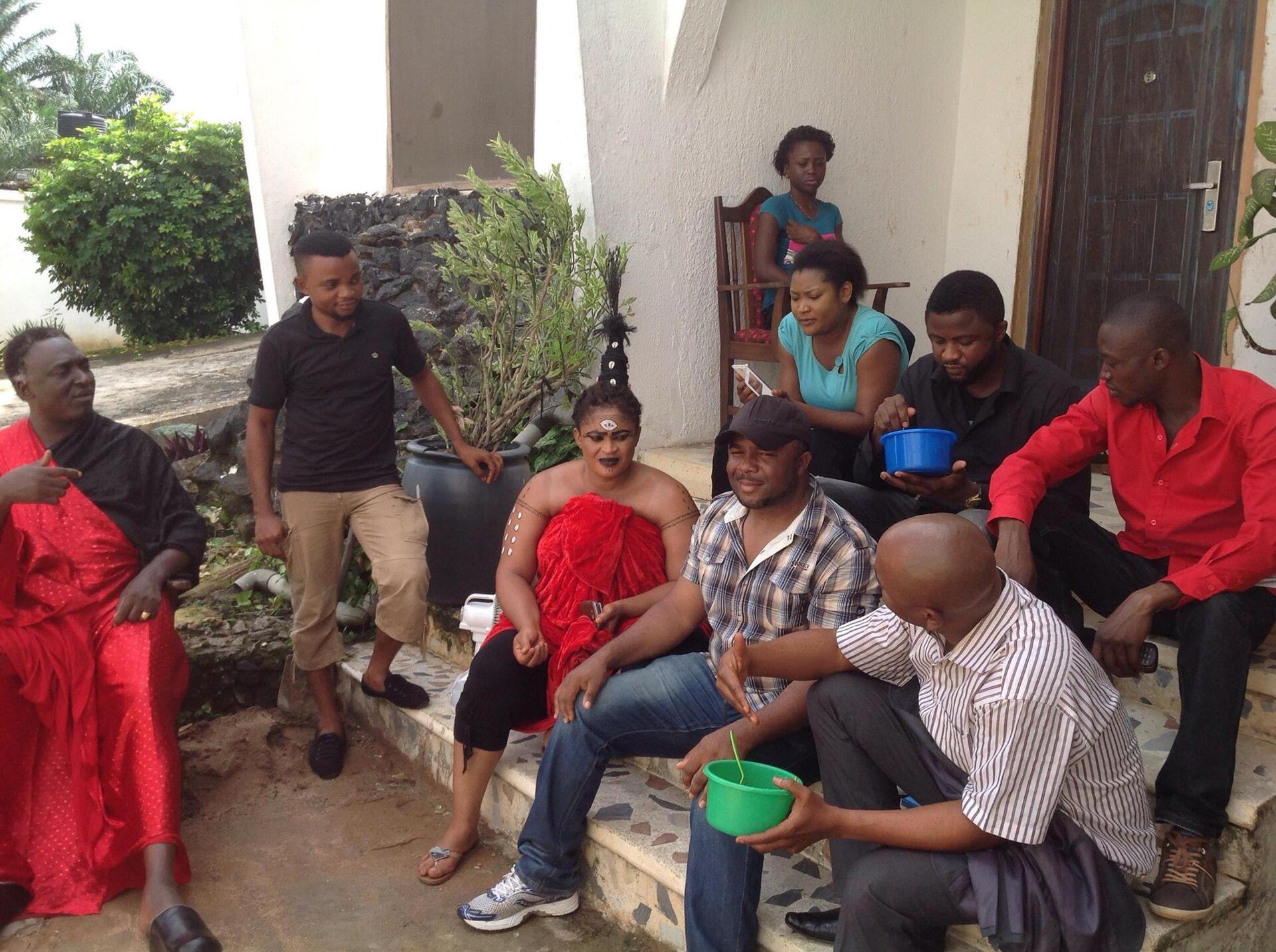
People gathered on the steps of a Nollywood film set
Awka, Anambra State
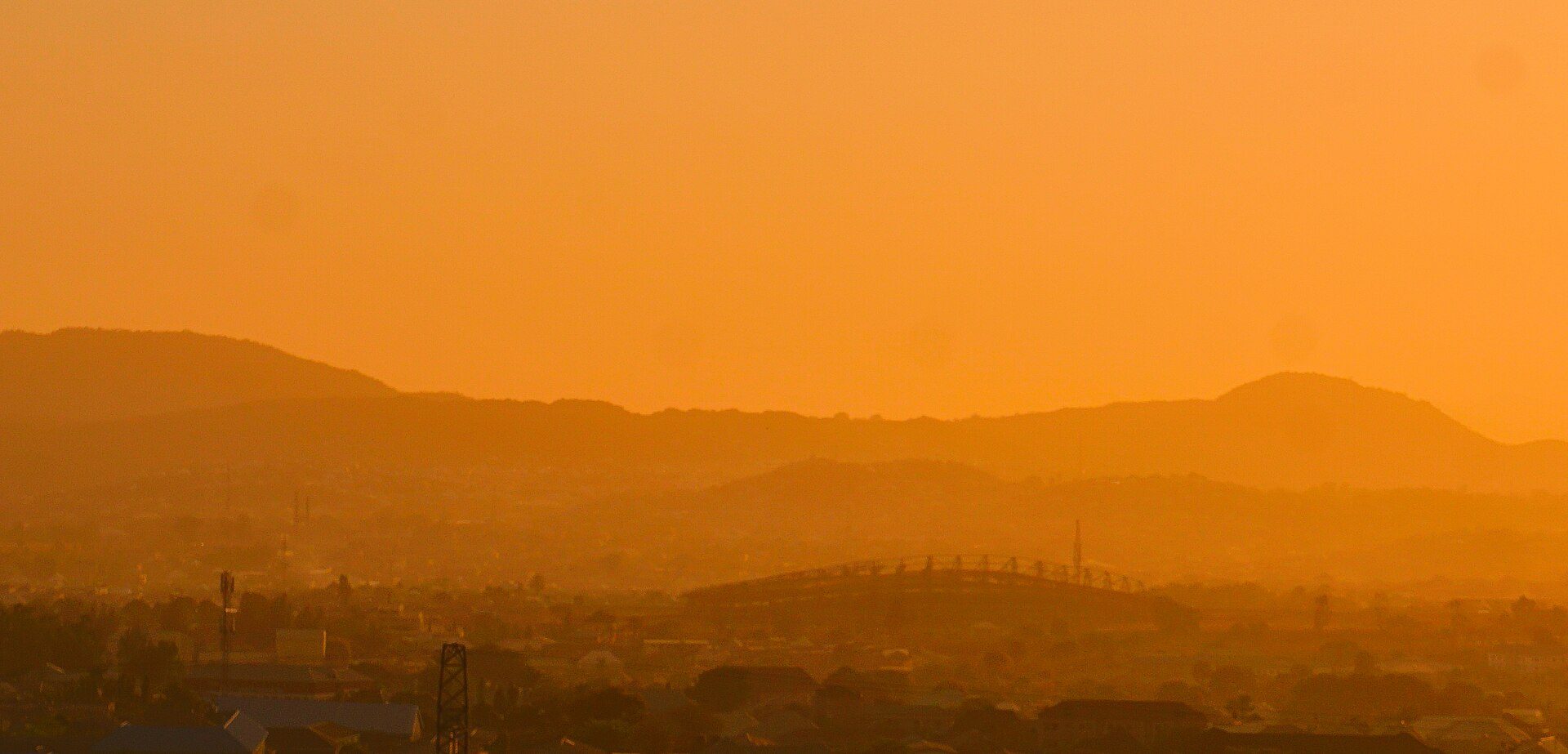
Orange dawn light over the hills of the Jos Plateau
Jos, Plateau State

Classrooms, film sets and the early light over the Plateau: the next chapter is already being written.

Literature

Wole Soyinka

Playwright and poet. In 1986 he became the first African to win the Nobel Prize in Literature.

Athletics

Tobi Amusan

The hurdler who ran a world-record 12.12 seconds in Eugene, 2022.

Football

Oluebube Umejiaku

Golden Ball winner at the 2026 FIFA U-17 Women’s World Cup.

And every day

Teachers

In classrooms from Sokoto to Calabar, and everywhere between.

Nurses

On the night shift, in clinics and hospitals across the country.

Coders

Building for more than 200 million neighbours.

Names we know. And the ones nobody has written down yet.

A nation of many histories.

A story still unfolding.

Nigeria.

More than a name

Sources & credits

Every image, with its maker.

All photographs and video come from Wikimedia Commons and are used under the licences shown. Files were downloaded, resized and re-encoded; on screen they are cropped with CSS and graded with CSS filters (archival scenes in sepia monochrome). CC BY-SA works stay under CC BY-SA 4.0. People and places shown keep their own rights. No audio is used anywhere on this site.

3D · Reconstruction

Bronze Head from Ife

A 3D artist’s reconstruction by yugengen, CC Attribution 4.0, shown in Sketchfab’s embedded WebGL viewer. It is a reconstruction, not a museum scan. Model page ↗

3D · Original build

Nigeria, extruded

Built for this site from Natural Earth state boundaries (public domain), grouped into the six geopolitical zones. Natural Earth ↗

Photographs · 41 files
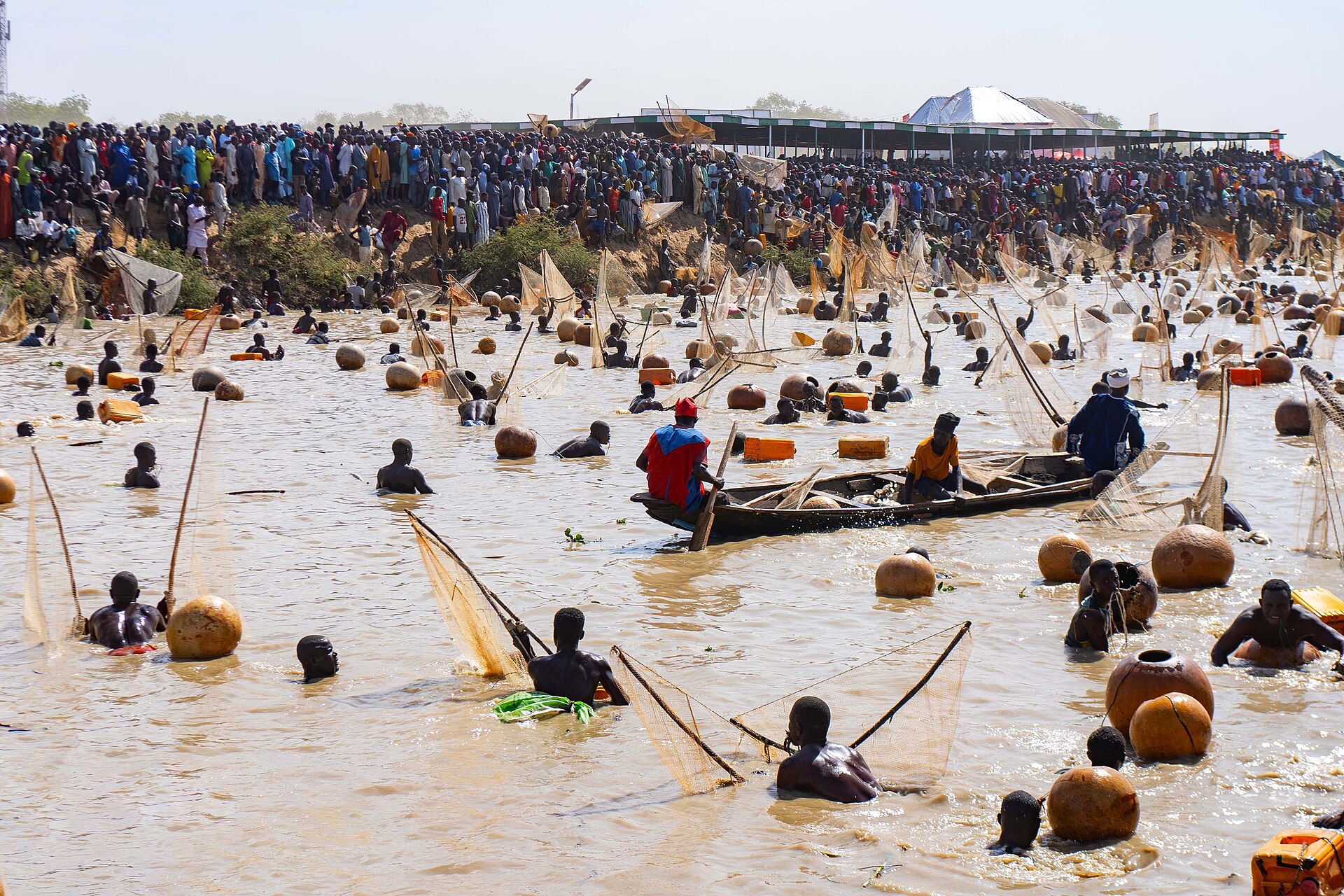
  • Thousands of fishers wading into the river with hand nets and gourds during the Argungu Fishing Festival

    Argungu, Kebbi State

    Nakandealiyu32

    CC BY-SA 4.0File page ↗
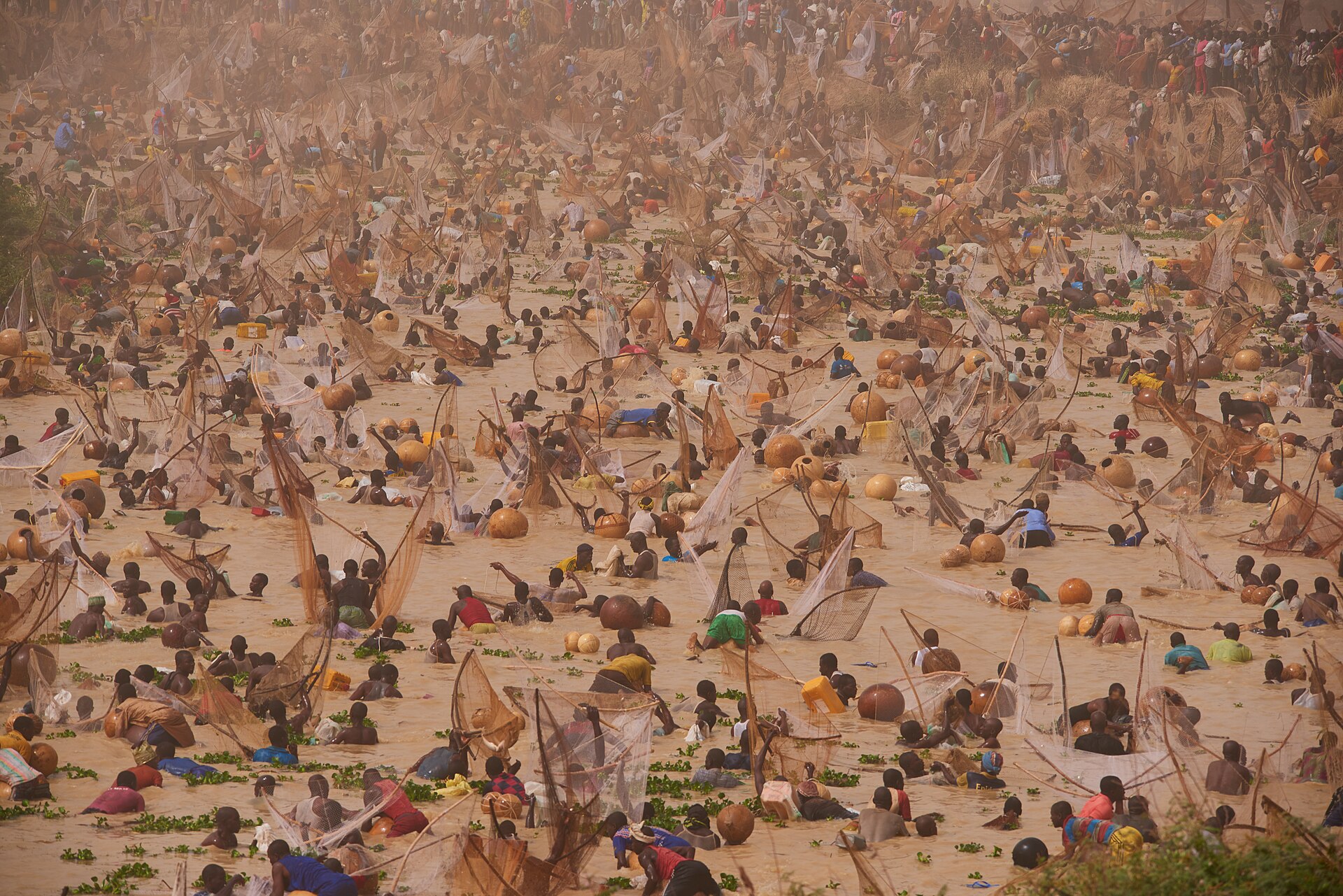
  • A dense crowd of fishers in the water at the Argungu Fishing Festival, seen from above

    Argungu, Kebbi State

    Sani Maikatanga

    CC BY-SA 4.0File page ↗

  • Turquoise water of Wikki Warm Spring surrounded by forest in Yankari Game Reserve

    Yankari, Bauchi State

    BatureTaraba

    CC BY 4.0File page ↗
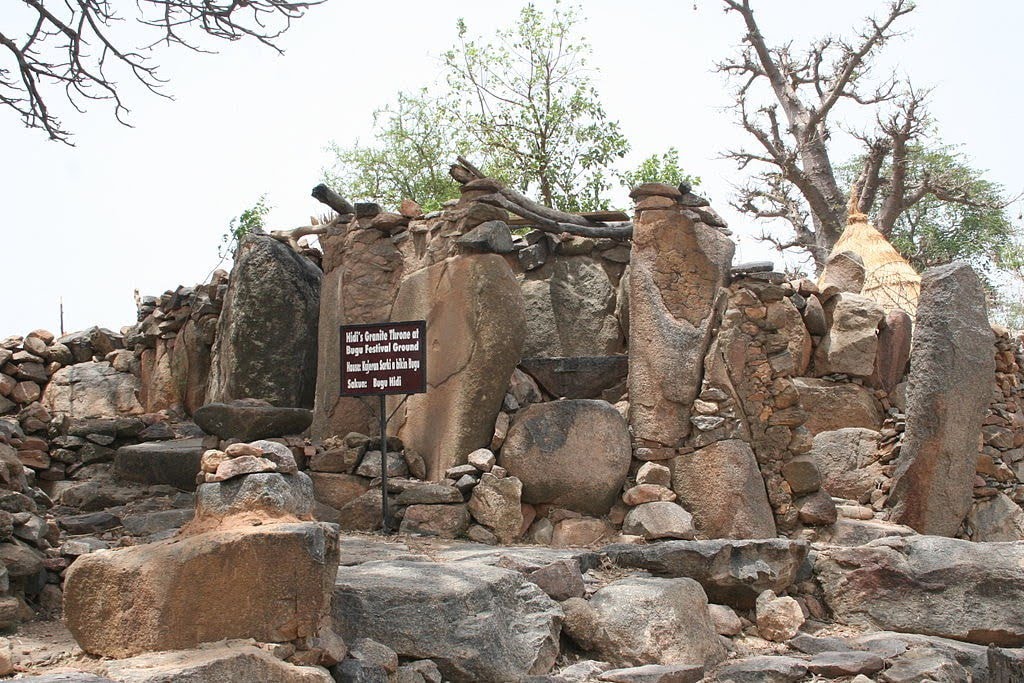
  • Dry-stone walls and standing stones of the Sukur cultural landscape in Adamawa State

    Sukur, Adamawa State

    Elcious

    CC BY-SA 4.0File page ↗
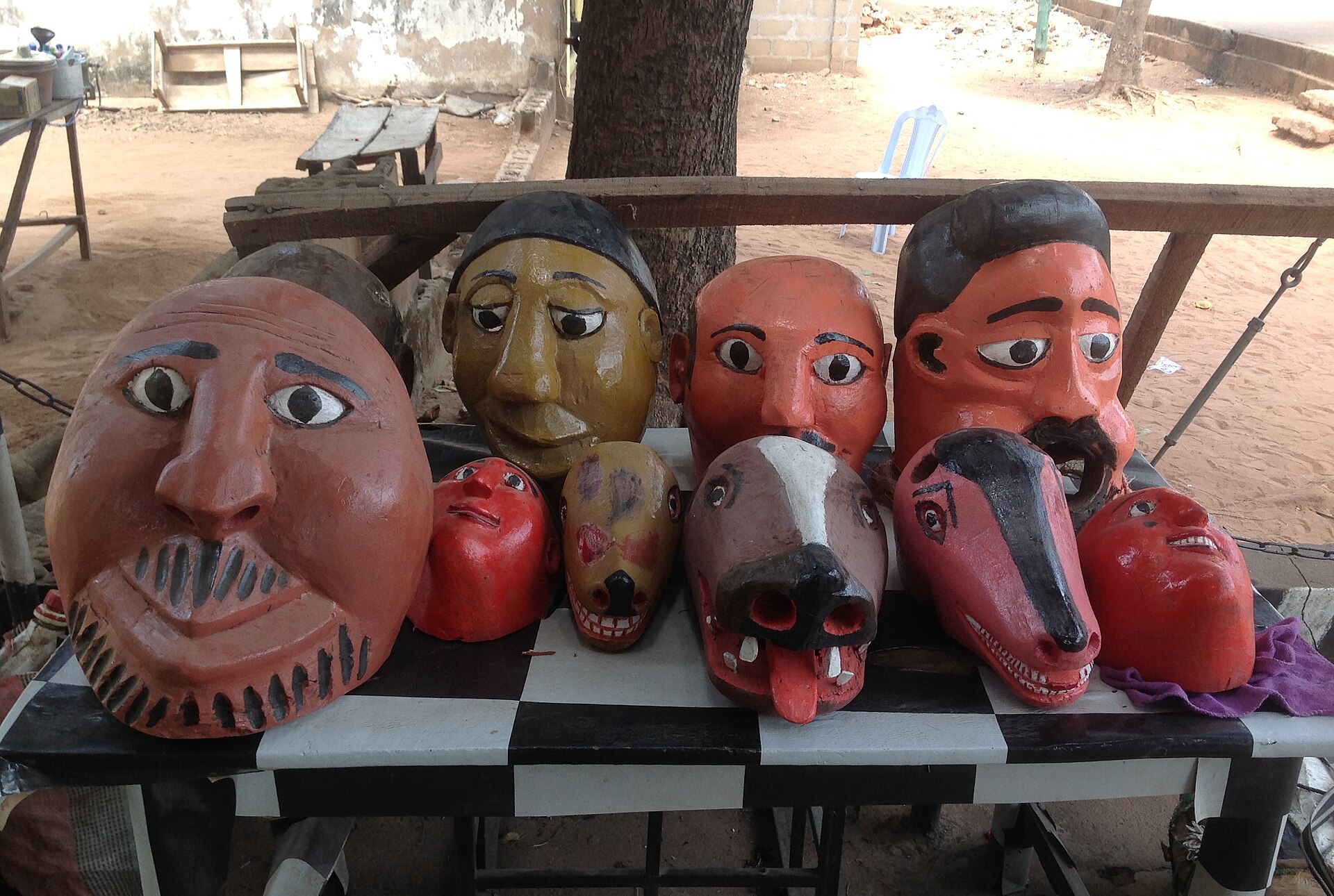
  • Painted Kwagh-hir masks and puppets of the Tiv people arranged on a table

    Benue State

    Bemmax

    CC BY-SA 4.0File page ↗
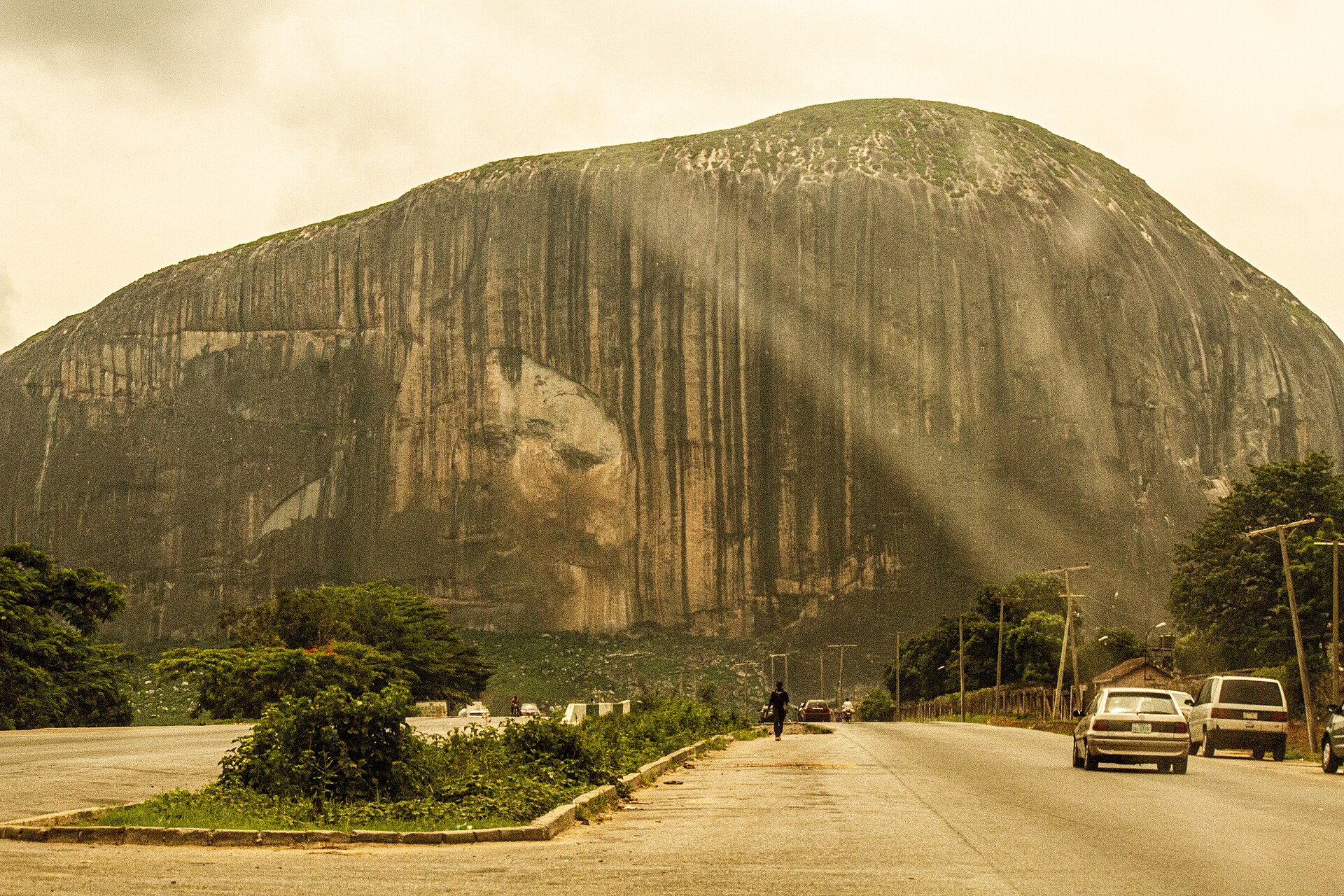
  • Zuma Rock, a vast granite monolith, rising above a road in Niger State

    Zuma Rock, Niger State

    GodwinPaya

    CC BY-SA 4.0File page ↗
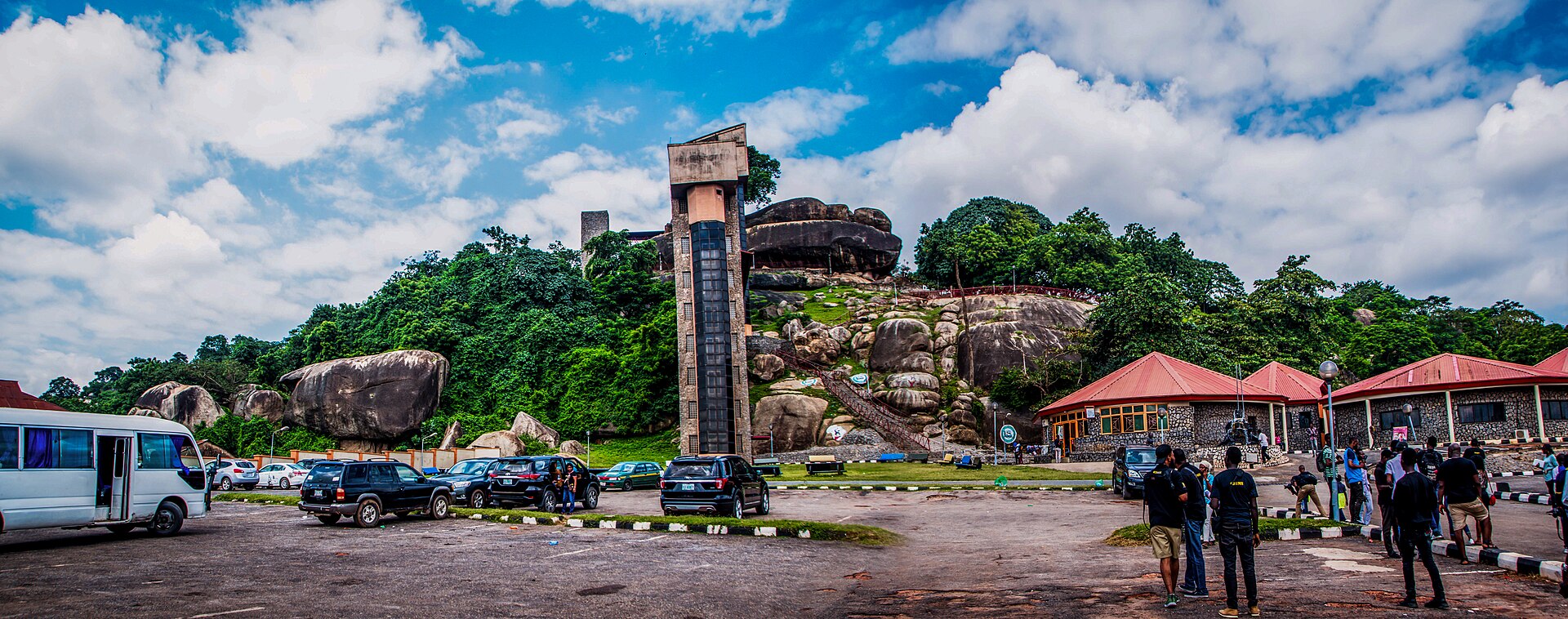
  • The entrance of Olumo Rock with its granite outcrops and visitor pavilions

    Abeokuta, Ogun State

    Adedayo Adesilola

    CC BY-SA 4.0File page ↗
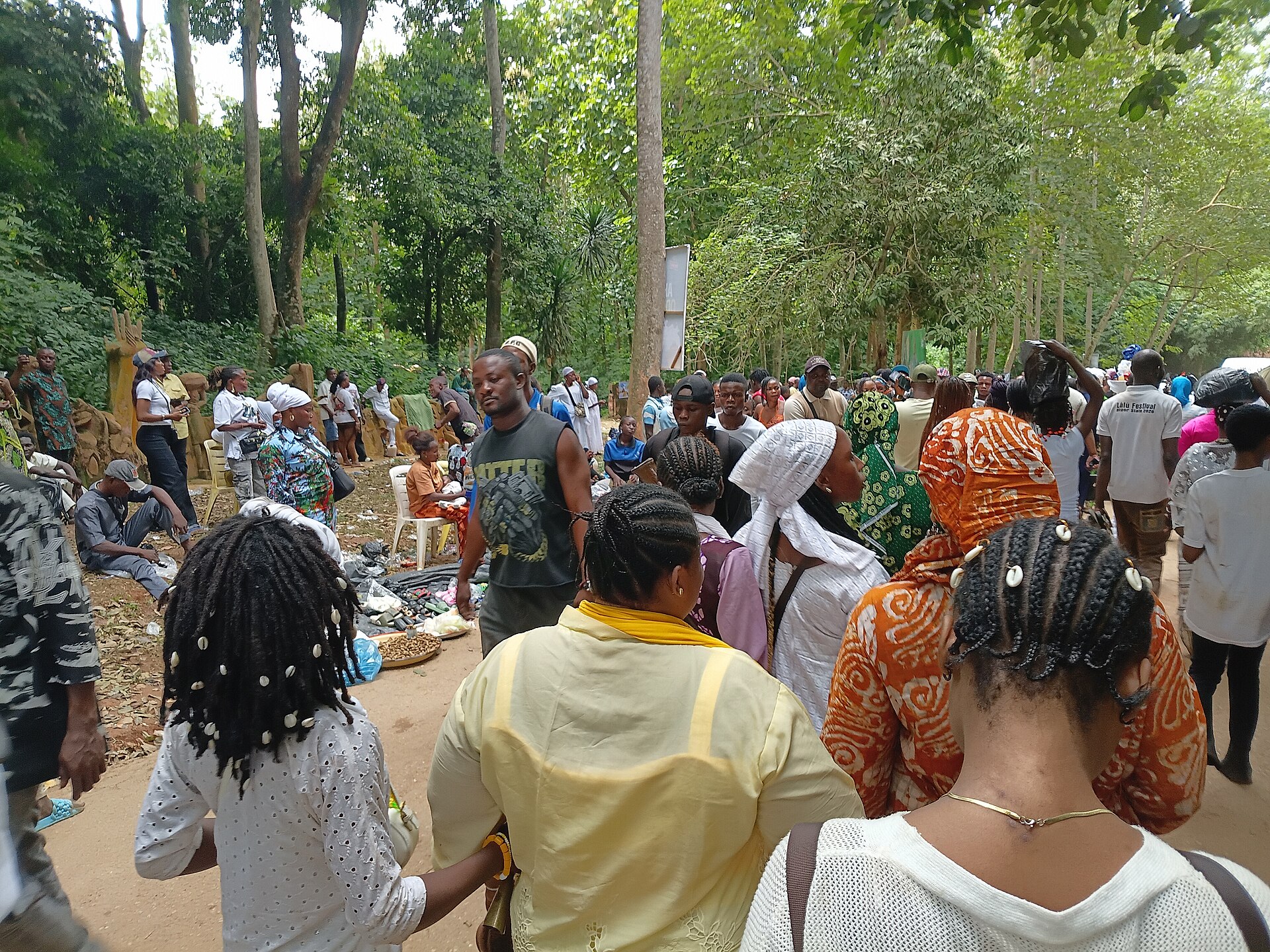
  • Visitors gathering among trees at the Osun-Osogbo festival grounds

    Osogbo, Osun State

    Royalesignature

    CC BY-SA 4.0File page ↗
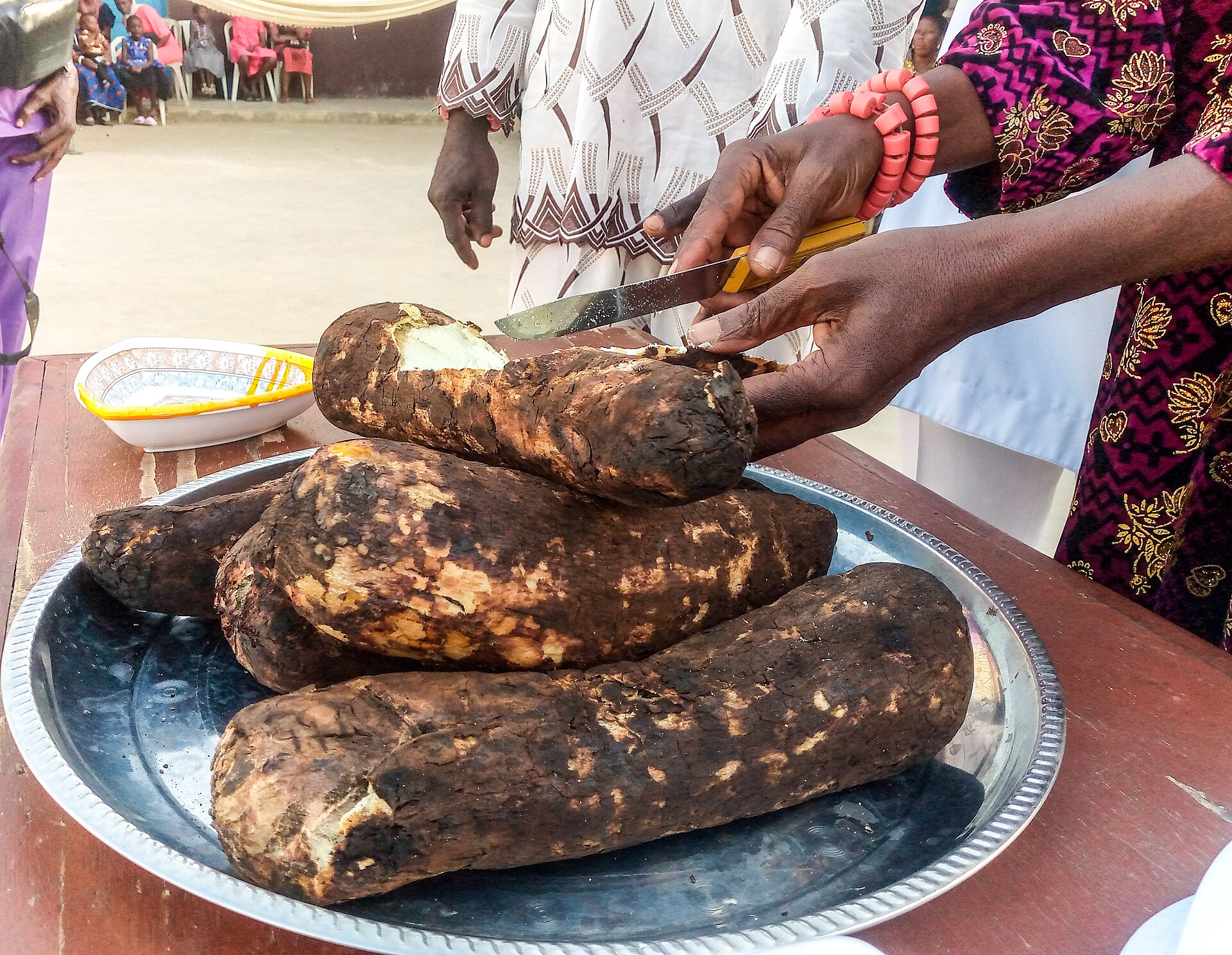
  • Hands slicing a freshly harvested yam on a metal platter at a New Yam celebration

    Igbo community, south-east Nigeria

    Frankincense Diala

    CC BY-SA 4.0File page ↗
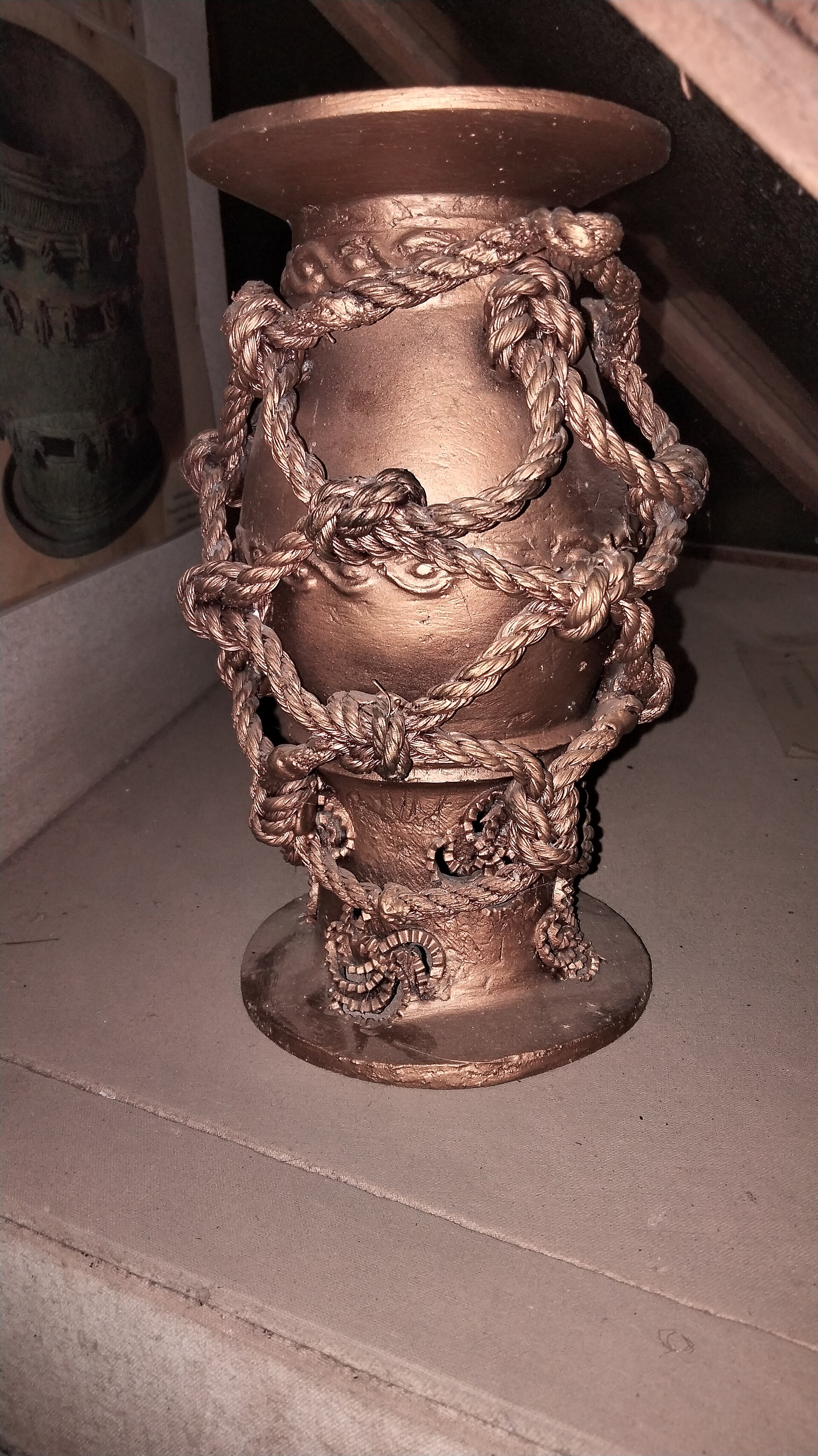
  • A bronze roped pot of the Igbo-Ukwu tradition in a museum case

    Igbo-Ukwu bronzes

    Timzy D'Great

    CC BY-SA 4.0File page ↗
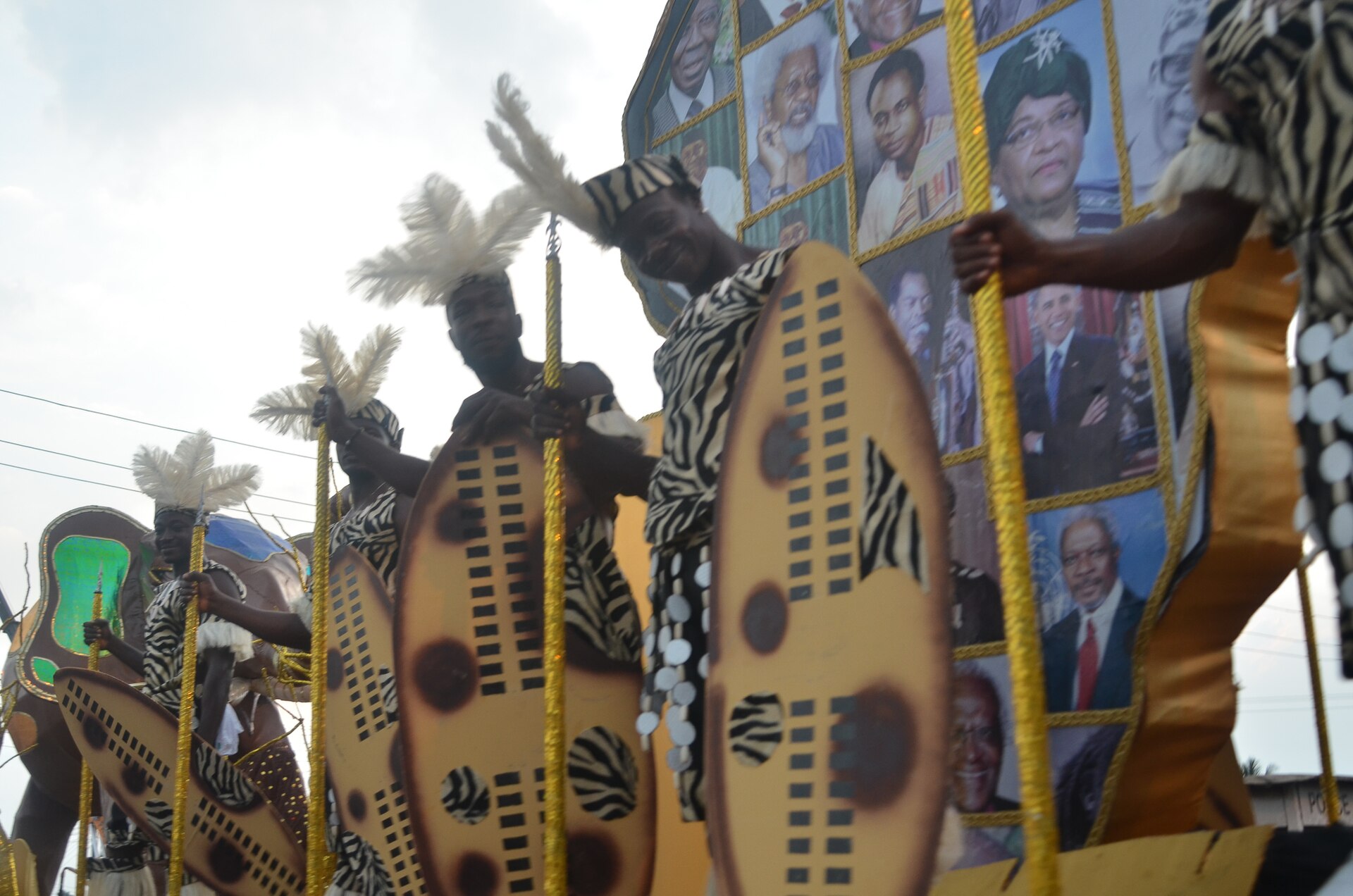
  • Carnival performers with painted shields and feathered headdresses at the Calabar Carnival

    Calabar, Cross River State

    Teemages

    CC BY-SA 4.0File page ↗
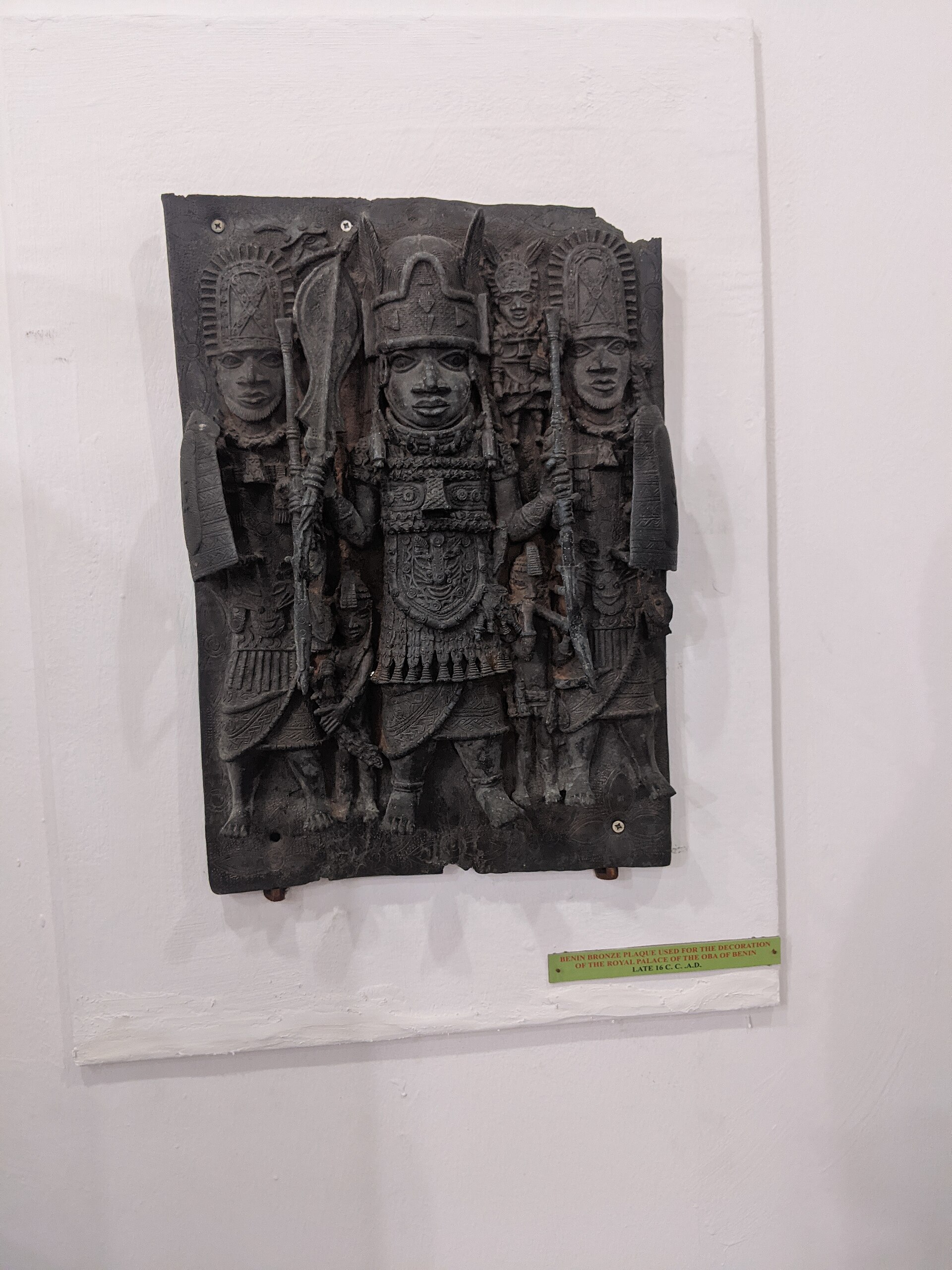
  • A Benin bronze plaque of the royal palace tradition mounted on a museum wall

    Benin Kingdom

    Stephanie cheks

    CC BY-SA 4.0File page ↗
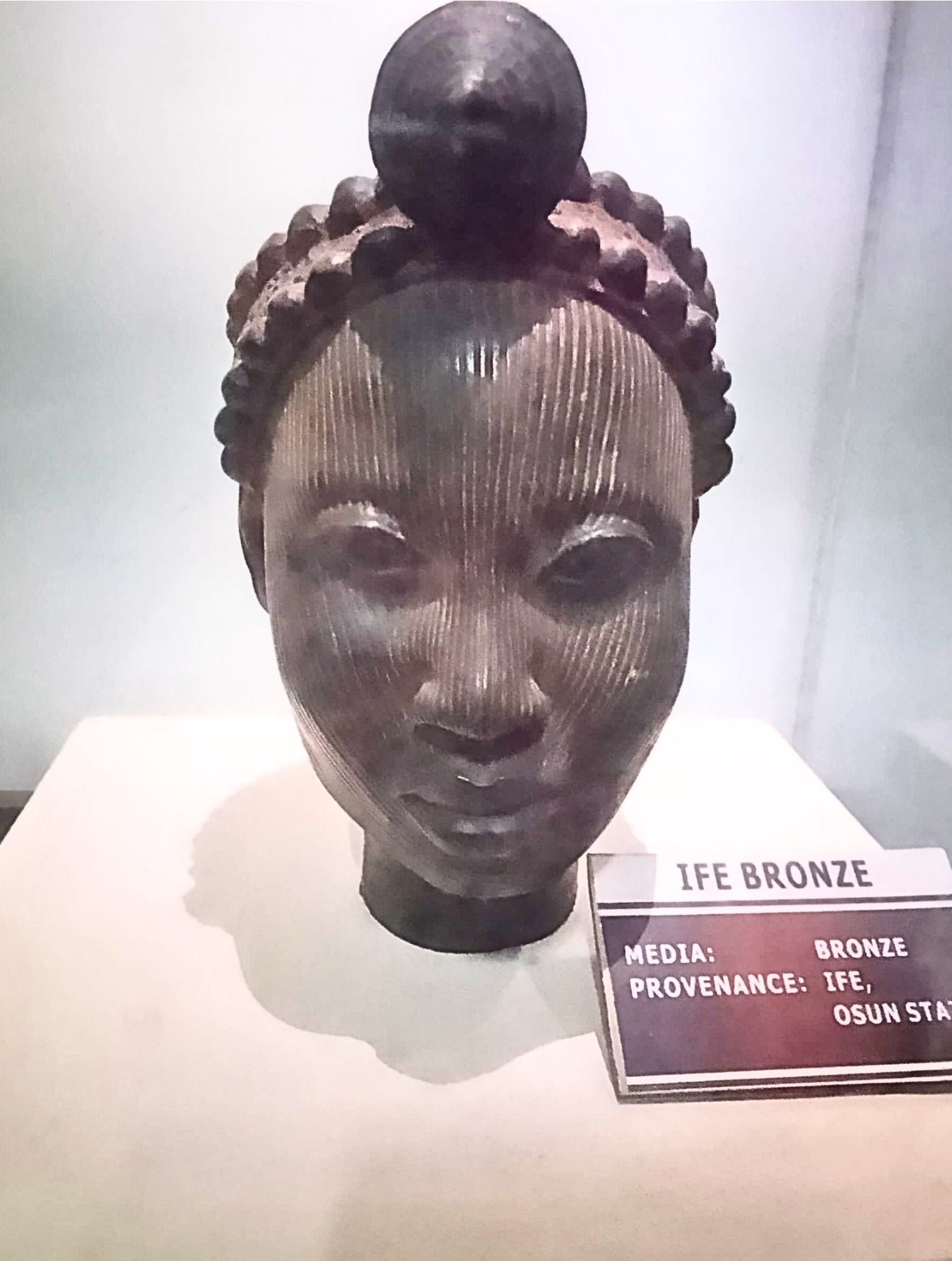
  • A bronze head in the Ife naturalistic style on display in a museum

    Ife style, museum display in Ilorin

    CloudyMyst

    CC BY-SA 4.0File page ↗
  • A Nok terracotta figure seated with its head resting on one hand

    Nok culture, Louvre

    Marie-Lan Nguyen

    Public domainFile page ↗
  • Prime Minister Abubakar Tafawa Balewa waving from a car on Independence Day

    Lagos, 1 October 1960

    Photographer not recorded (public domain)

    Public domainFile page ↗
  • Crowd celebrating beneath the Nigerian independence emblem, October 1960

    Nigeria, October 1960

    Photographer not recorded (public domain)

    Public domainFile page ↗
  • Rows of Benin bronze plaques displayed in the British Museum

    British Museum, London

    Geni

    CC BY-SA 4.0File page ↗
  • Front page of the New Nigerian newspaper announcing Owerri captured at the end of the civil war

    January 1970

    Aart Rietveld

    CC BY-SA 4.0File page ↗
  • The National Assembly building in Abuja, home of Nigeria's legislature

    Abuja

    Kabusa16

    CC BY-SA 4.0File page ↗
  • Memorial grave marking the 1929 Women's War in Aba

    Aba, Abia State

    Dappa Solomon

    CC BY-SA 4.0File page ↗
  • Horsemen in colourful regalia on the ground of the Kano Durbar

    Kano, September 2016

    DonCamillo

    CC BY-SA 4.0File page ↗
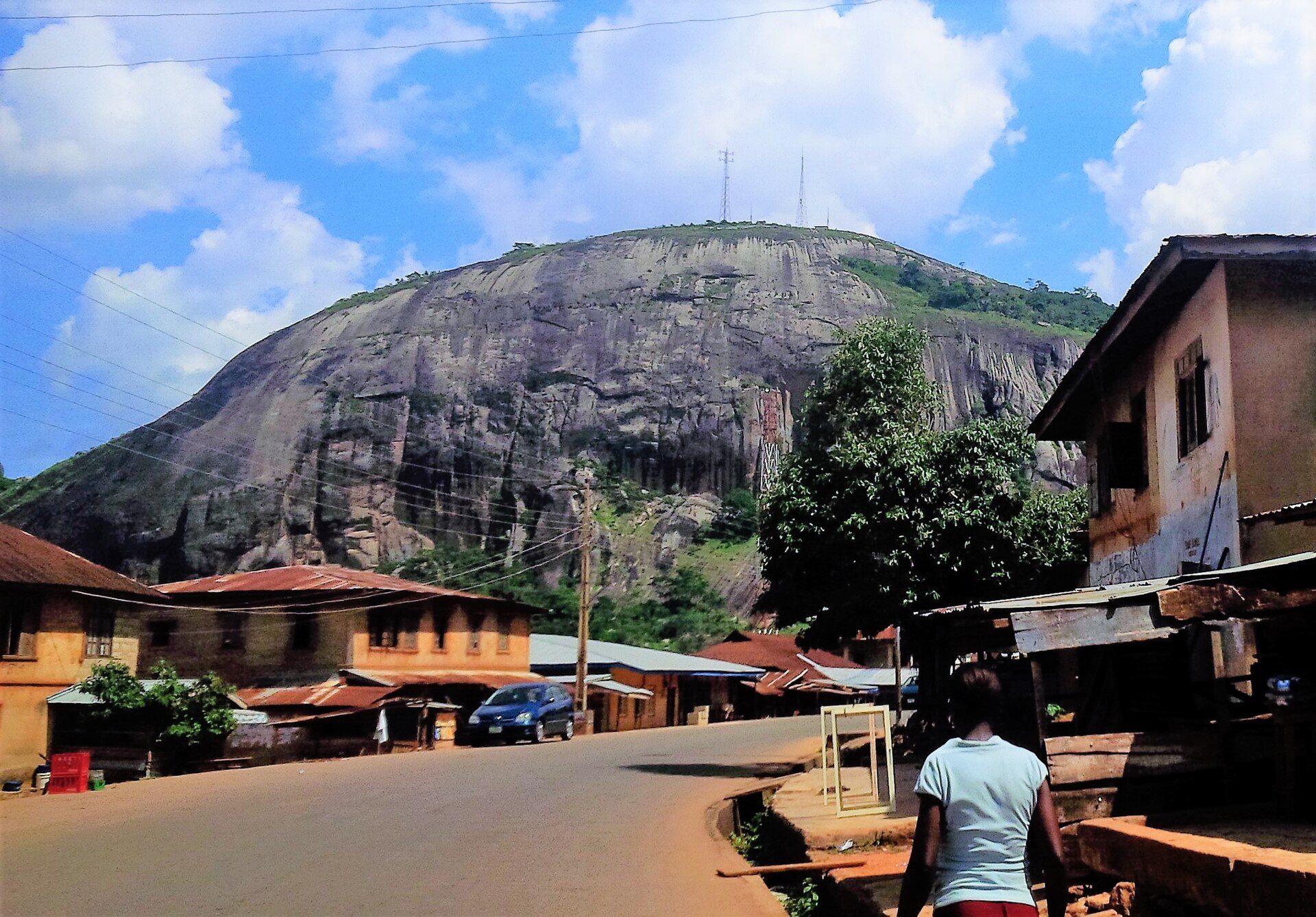
  • The granite dome of Idanre Hill rising above a town street

    Idanre, Ondo State

    Victor Akinfala

    CC BY-SA 4.0File page ↗
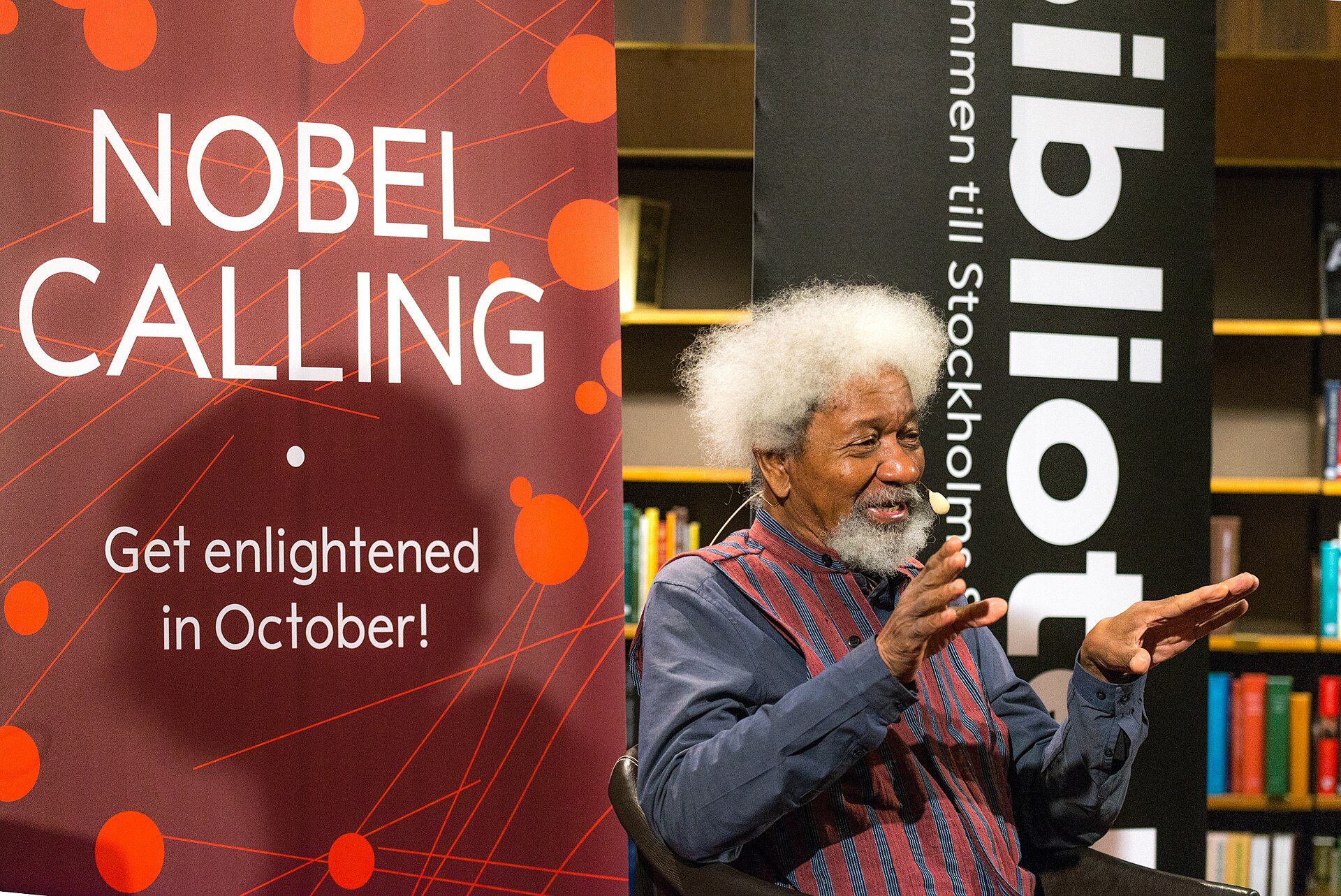
  • Wole Soyinka speaking in front of bookshelves in Stockholm

    Stockholm, 2018

    Frankie Fouganthin

    CC BY-SA 4.0File page ↗
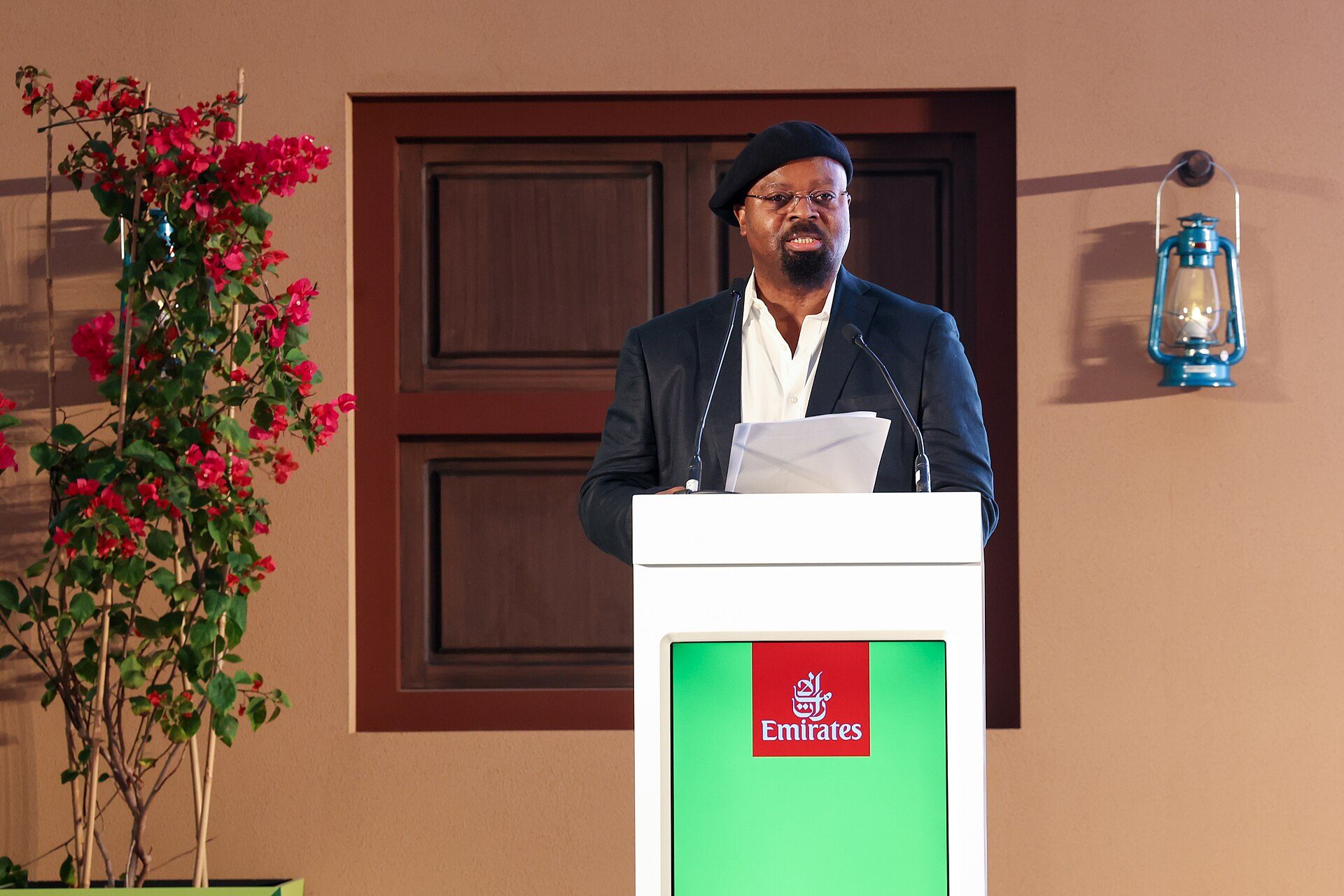
  • Ben Okri reading at a lectern

    Literary festival

    Serine Ben Brahim

    CC BY-SA 4.0File page ↗
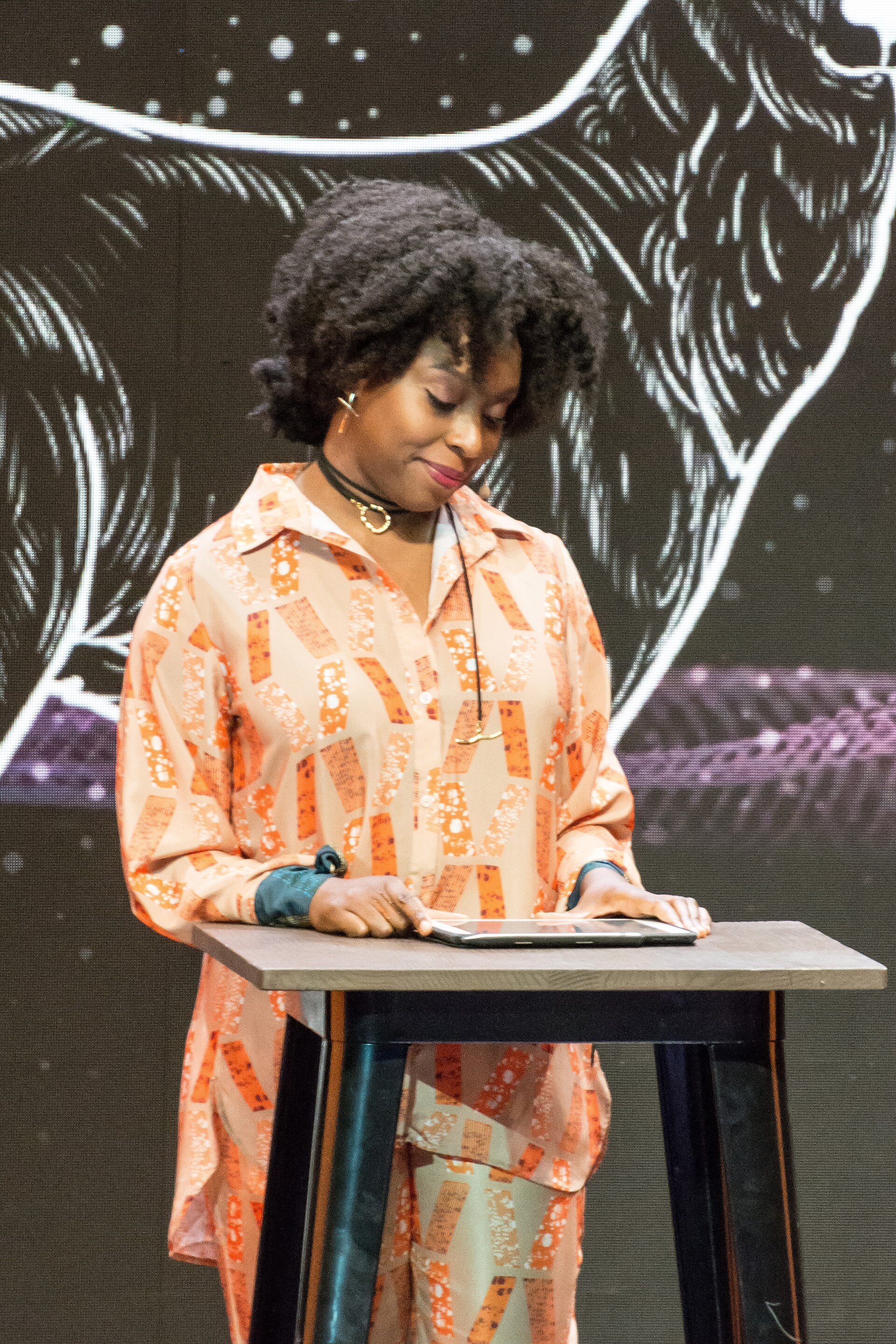
  • Chimamanda Ngozi Adichie standing at a lectern in a patterned orange outfit

    Congreso Futuro, 2020

    Carlos Figueroa

    CC BY-SA 4.0File page ↗
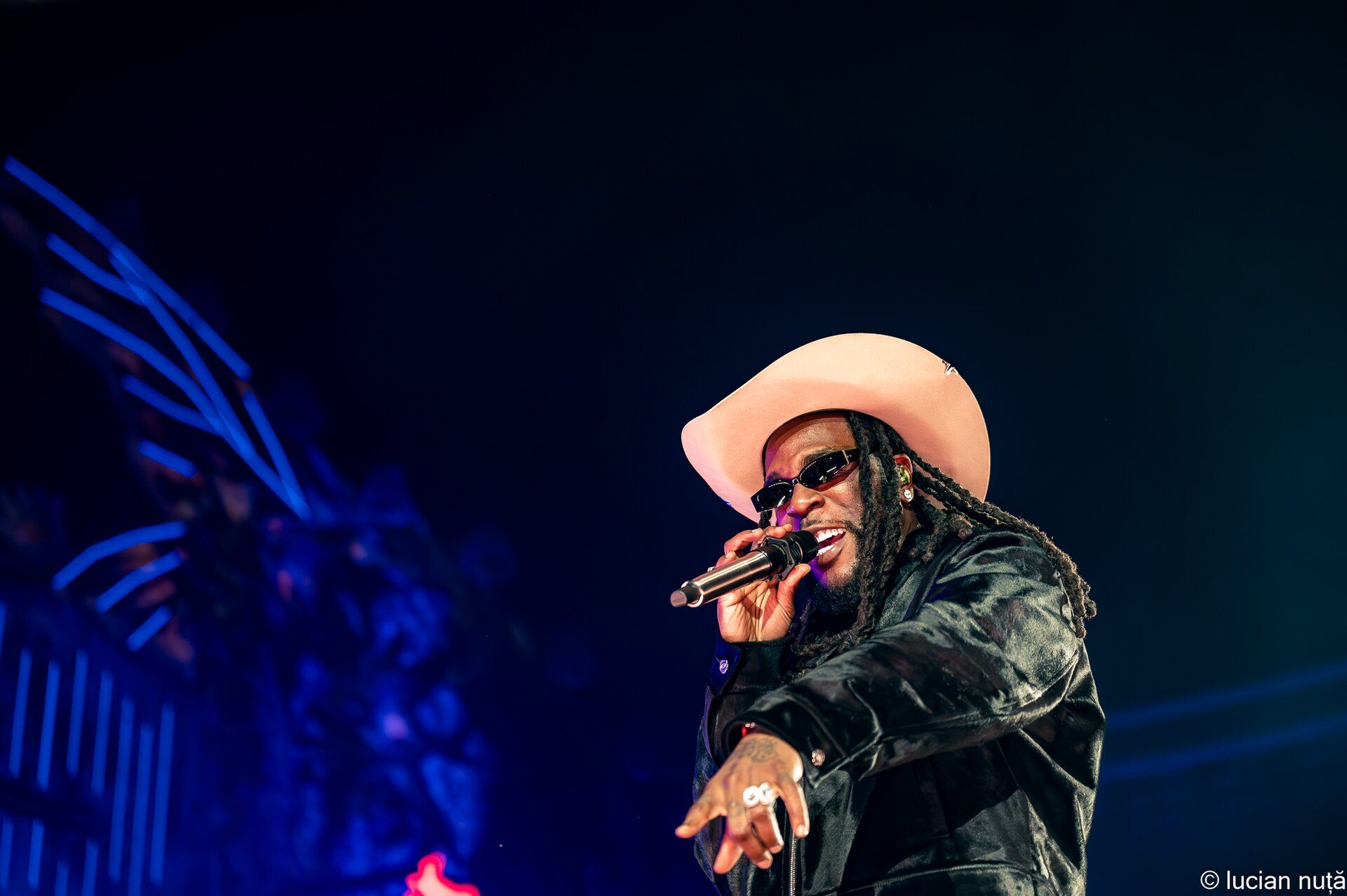
  • Burna Boy performing on stage

    Untold Festival, 2024

    Nuță Lucian from Cluj-Napoca, Romania

    CC BY-SA 2.0File page ↗
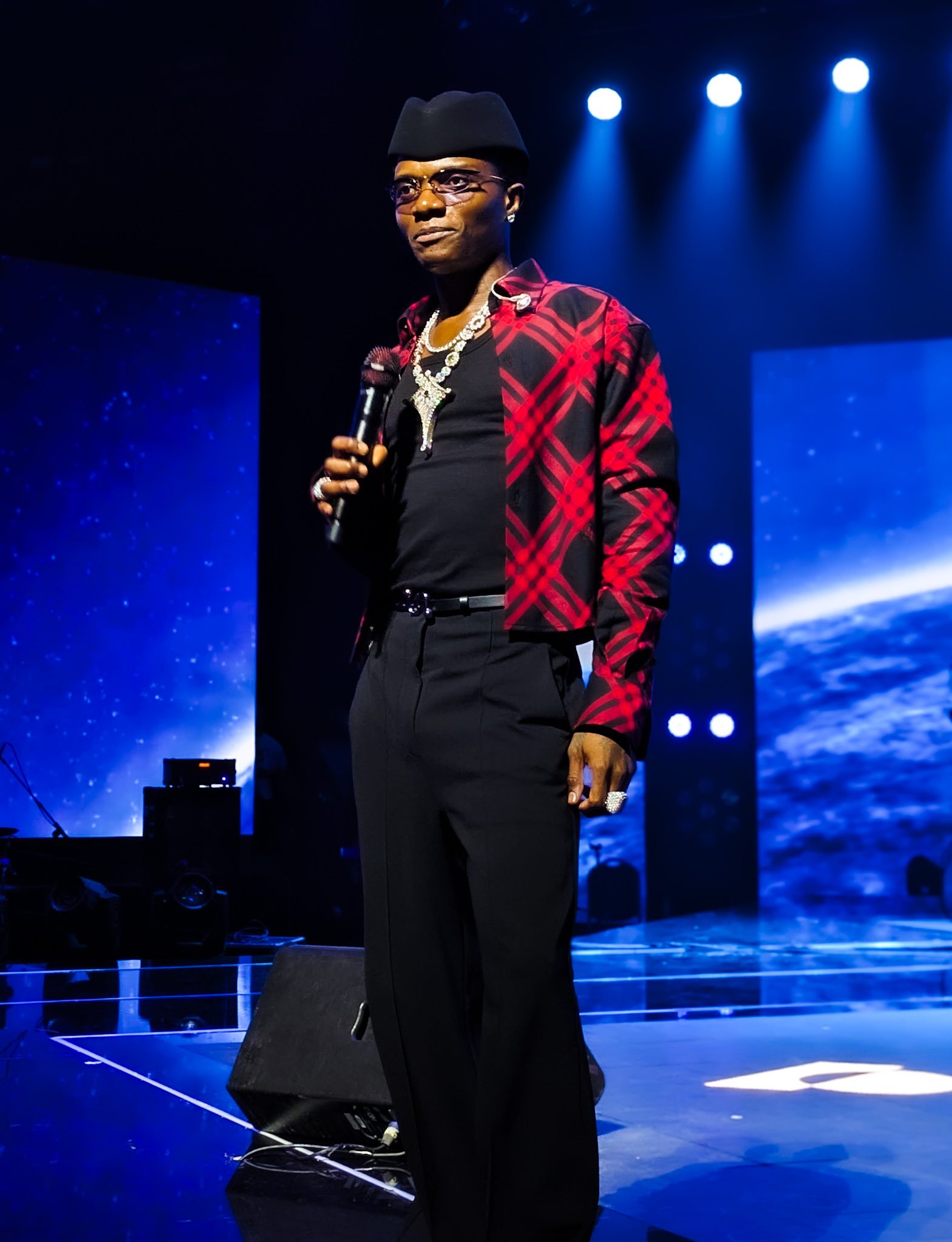
  • Wizkid on stage holding a microphone under blue lights

    Algiers, 2025

    Muhammed amine benloulou

    CC BY-SA 4.0File page ↗
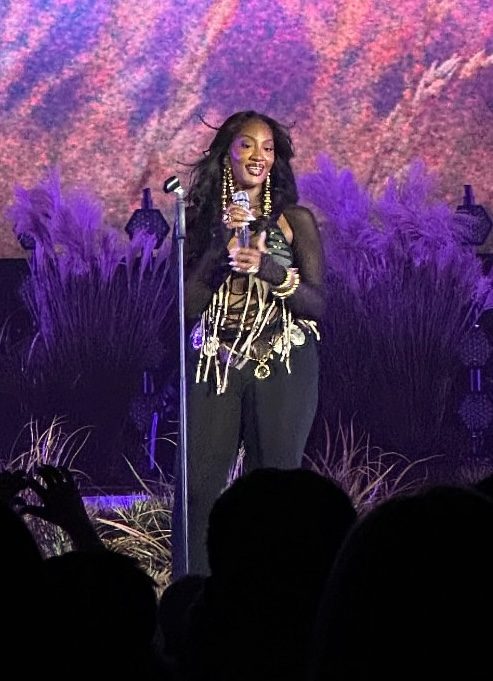
  • Tems performing on stage among purple pampas grass props

    Concert, 2025

    Patrick Cristiano

    CC BY-SA 4.0File page ↗
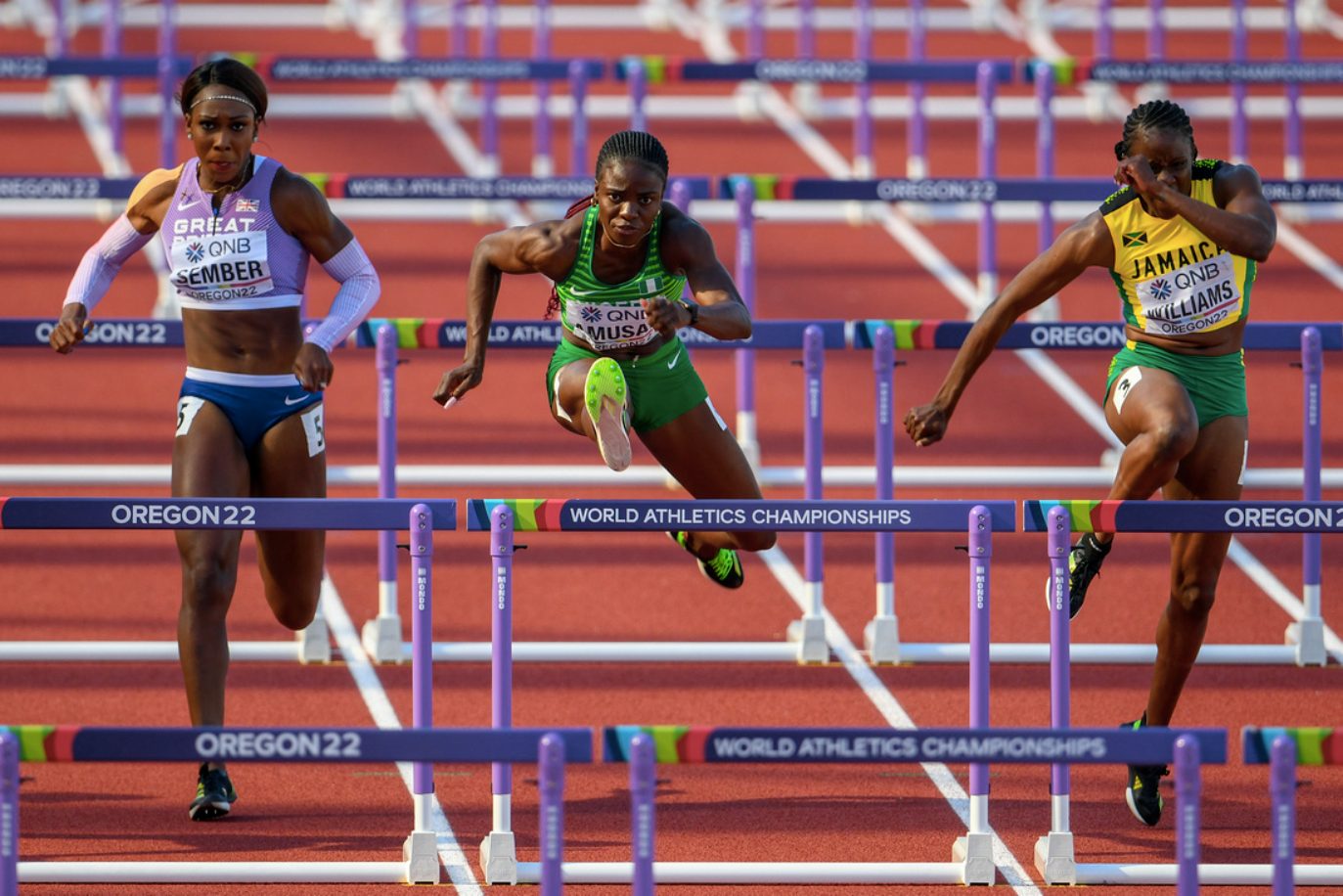
  • Women hurdlers in mid-race at the 2022 World Athletics Championships in Oregon, Tobi Amusan in the green Nigerian kit

    Eugene, Oregon, 2022

    Erik van Leeuwen, attribution: Erik van Leeuwen (bron: Wikipedia).

    CC BY-SA 4.0File page ↗
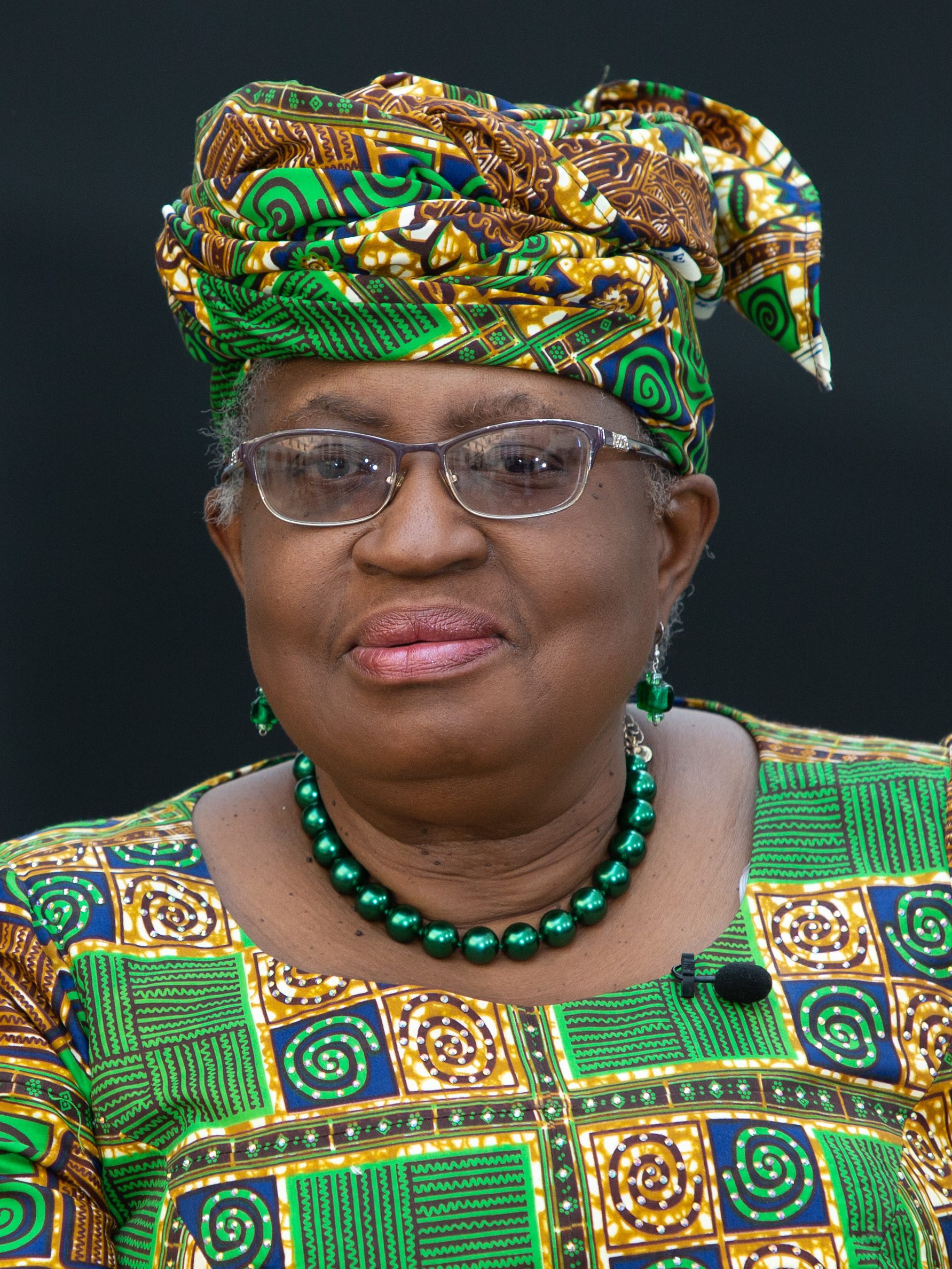
  • Ngozi Okonjo-Iweala in a green and gold headwrap and beaded necklace

    WTO, March 2021

    World Trade Organization

    CC BY-SA 2.0File page ↗
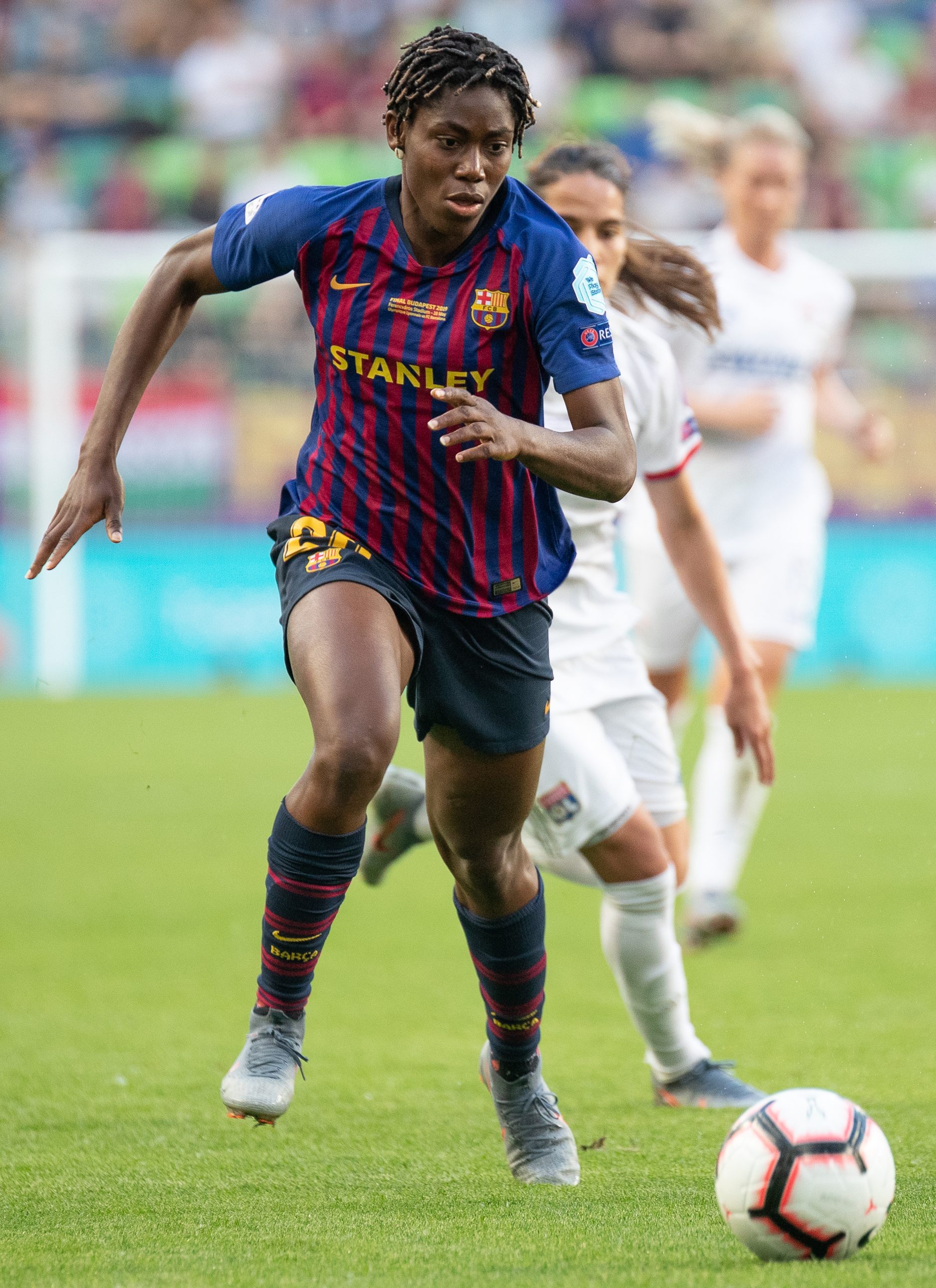
  • Asisat Oshoala playing for Barcelona in the Champions League

    2019

    Steffen Prößdorf

    CC BY-SA 4.0File page ↗
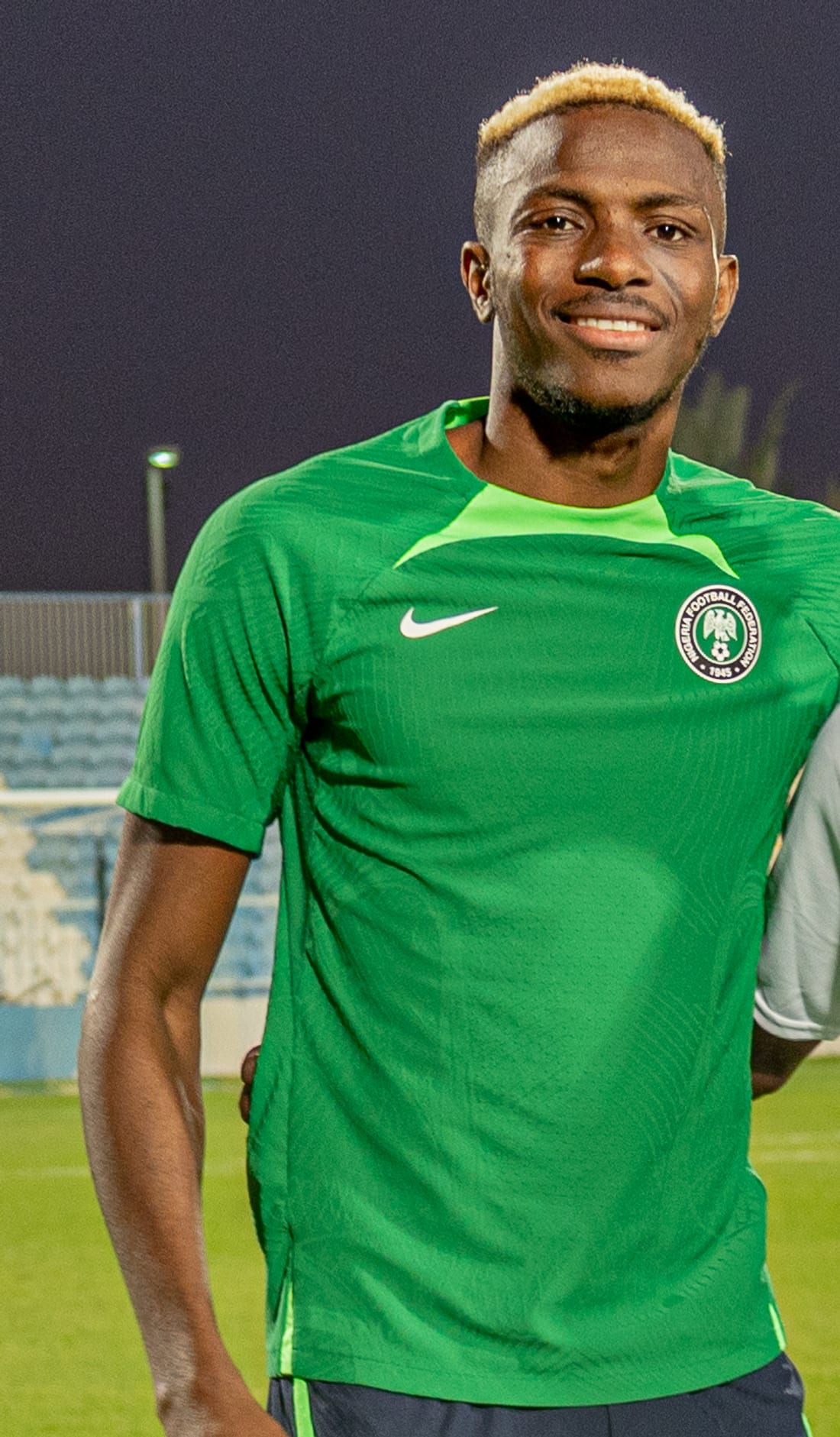
  • Victor Osimhen smiling in the green Nigeria national team kit

    Nigeria v Guinea, January 2024

    Fédération Guinéenne de Football (Flickr)

    Public domain (Flickr PDM)File page ↗
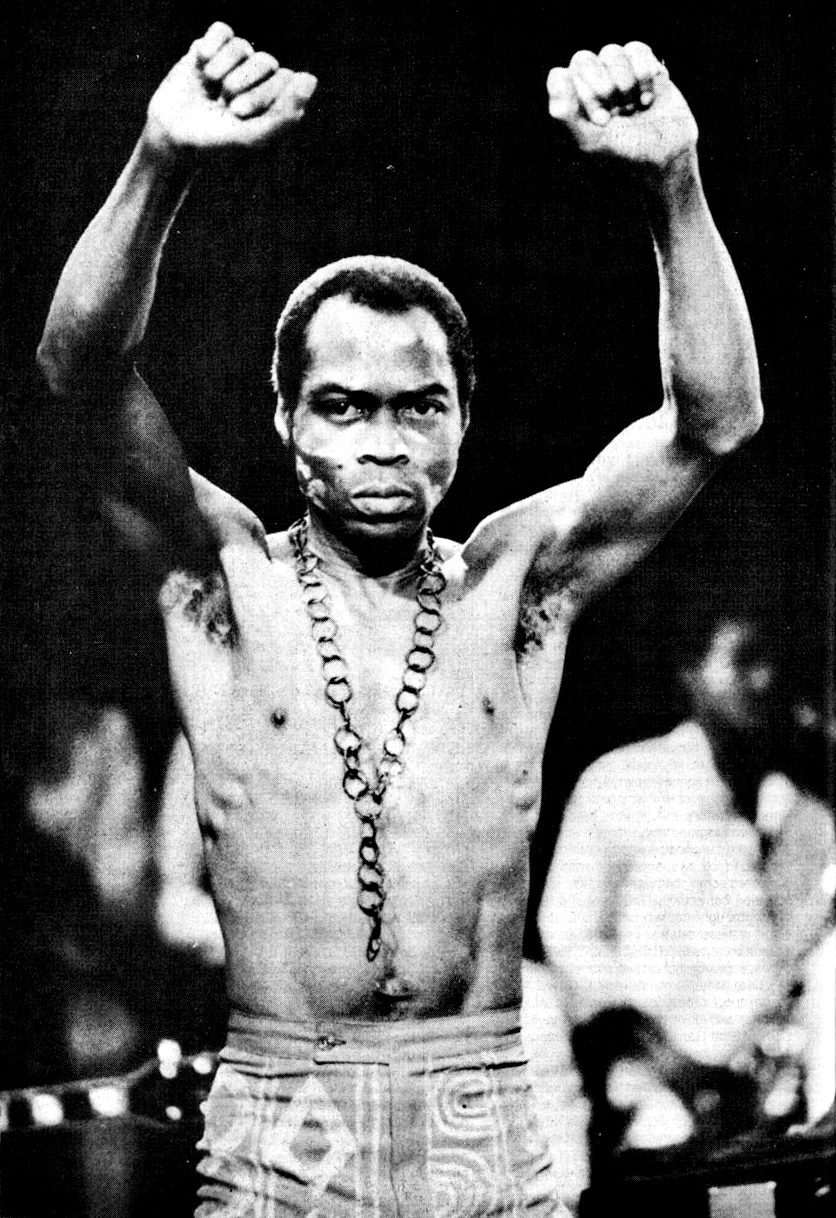
  • Fela Kuti on stage with both fists raised

    c. 1986

    Distributed by Celluloid Records

    Public domainFile page ↗
  • Chinua Achebe speaking at a lecture

    Buffalo, 2008

    Stuart C. Shapiro

    CC BY 3.0File page ↗
  • The Third Mainland Bridge stretching across the Lagos Lagoon at dusk

    Lagos Lagoon

    Johnbrainyvisuals

    CC BY-SA 4.0File page ↗
  • Schoolchildren in green uniforms talking beneath a covered walkway

    Nigeria

    Dolapo Falola from New York, NY, USA

    CC BY-SA 2.0File page ↗
  • People gathered on the steps of a Nollywood film set

    Awka, Anambra State

    Bestvillage

    CC BY-SA 4.0File page ↗
  • Orange dawn light over the hills of the Jos Plateau

    Jos, Plateau State

    Shadygaz

    CC BY-SA 4.0File page ↗
  • A Nigerian player raises both arms in celebration beside the goal during a Women’s Africa Cup of Nations match

    Super Falcons v Botswana, WAFCON 2022, Morocco

    Happiraphael

    CC BY-SA 4.0File page ↗
  • Nigeria’s D’Tigress in green defending against France in the Olympic women’s basketball tournament

    France v Nigeria, Paris 2024

    Supporterhéninois

    CC BY-SA 4.0File page ↗
  • A painted wooden Mami Wata figurine from twentieth-century Nigeria on display in a museum case

    Horniman Museum, London

    Ethan Doyle White

    CC BY-SA 4.0File page ↗

Video · 2 clips

  • Fishers working in the creeks of Brass Island

    Brass Island, Bayelsa State · clip trimmed by the browser loop only

    Christopher Wonder Osariemen

    CC BY-SA 4.0File page ↗

  • A young man processing palm oil in the Niger Delta creeks

    Niger Delta, Bayelsa State · clip trimmed by the browser loop only

    Christopher Wonder Osariemen

    CC BY-SA 4.0File page ↗

Achievement facts in Chapter 5 were checked against FIFA, CAF, FIBA, World Athletics, the Nobel Prize, the Booker Prizes, the Women’s Prize, the Recording Academy, Sundance, the WTO and UNESCO; each scene links its source. Those organisations’ own photographs are not reused. Where no licensed photograph exists, the scene is typographic.

Built with